
Control horario: preparing your SME for a Labour Inspection
Control horario: preparing your SME for a Labour Inspection
Why the registro de jornada is now a board-level topicSince 2019, every company in Spain with employees on the payroll has been legally obliged to kee...
Why the registro de jornada is now a board-level topic
Since 2019, every company in Spain with employees on the payroll has been legally obliged to keep a daily record of working time. The rule is simple on paper: each worker's start and finish time must be captured day by day, kept for four years and made available to the employee, their legal representatives and the Labour and Social Security Inspectorate. In practice, many SMEs in Lleida, Barcelona, Tarragona and Girona still rely on spreadsheets, paper sheets or a shared calendar that nobody actually verifies. That gap is exactly where an inspection finds its footing.
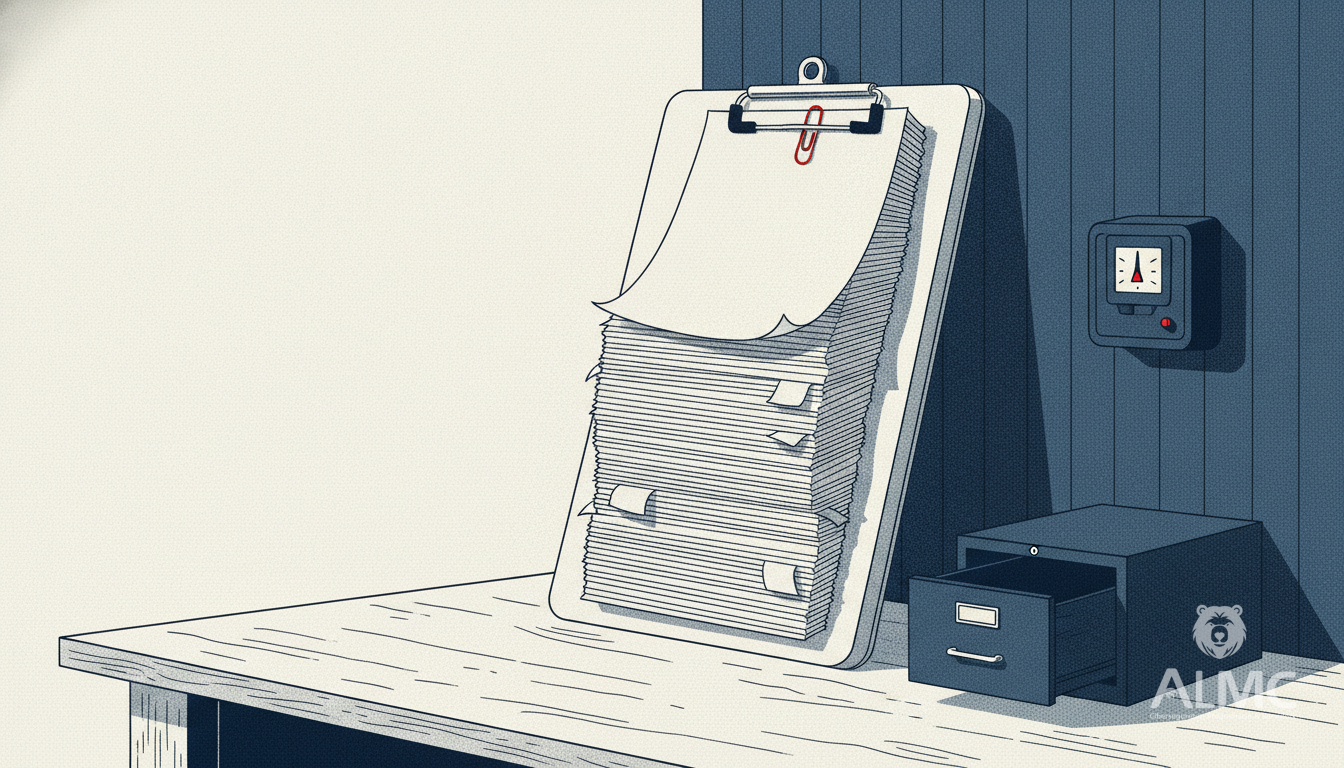
An inspection is not automatically an accusation. It is a routine check that the company is meeting its labour obligations, and time recording is one of the areas officers look at. Still, the difference between a calm visit and a stressful one usually comes down to how well the records have been kept in the months before anyone knocks on the door.
How an inspection can begin — and it may not be a visit
There is a common assumption that an inspection always starts with an officer walking into the office. Spanish legislation allows inspectors to enter workplaces freely and without prior notice, but a formal action can also take other shapes:
- A physical visit to the workplace, with requests for information from both the employer and the staff.
- A written requirement for the company to appear and submit specific documentation within a set deadline.
- An administrative review based purely on data already held by the Administration.
In other words, the first contact might be a letter asking for the last few years of time records, not a person at reception. Companies that can export clean, dated reports in minutes handle this far better than those reconstructing files from memory.
What officers actually check
The question is not whether you own a clocking app or a sheet with times written on it. The point is whether you can demonstrate a real record of the hours each person actually worked. Article 34.9 of the Workers' Statute requires a daily record showing the specific start and end of each working day, organised through collective bargaining, a company agreement or, failing that, an employer decision taken after consulting staff representatives.
A frequent and costly confusion is treating the planned schedule as if it were the record. A rota saying someone works from 08:00 to 16:00 proves nothing about what happened on a given Tuesday. The Inspectorate's technical criteria are explicit that calendars, shift plans and pre-built rotas do not replace the daily register. During a review, officers may cross-check recorded hours against contracts, payslips, overtime, shift patterns and even statements from the workers themselves.
Breaks deserve a mention too. The law requires start and finish times to be recorded, and does not generally demand that every pause be logged individually. However, if the working day includes rest periods that do not count as effective working time, your system should be able to identify them clearly, so that the record reflects reality rather than a rounded-up approximation.
Documents an inspector may request
Beyond the time records themselves, expect requests that connect the register to the rest of your HR paperwork. Typical items include contracts and any amendments, payslips for the periods under review, overtime documentation, shift schedules and the agreement or decision that defines how your recording system works. If the company has staff representatives, the way the system was agreed or communicated may also be examined. Keeping these documents aligned with the same periods as your time data avoids the classic problem of figures that do not reconcile.
The cost of getting it wrong
Failing to keep a proper register, or keeping one that cannot be relied upon, is treated as a serious infringement under Spanish labour law. Sanctions are graduated and can reach substantial sums per affected worker, and they are not the only exposure: inconsistencies can trigger further checks into overtime, rest periods or social security contributions. For a small business, the administrative fine is often the smaller part of the bill once legal fees, internal time and reputational damage are added.
Building a register that survives scrutiny
The most reliable defence is a system that captures data at the moment it happens, not afterwards. A digital clocking tool lets employees fichar from their mobile phone or a web browser, whether they are in the office in Lleida, on a client site in Barcelona or working remotely. Each entry is timestamped, attributed to a named worker and stored securely, which turns a vague obligation into an auditable trail.
Three practical habits make the biggest difference:
- Record daily, not monthly. Reconstructing a month of hours from memory is where most discrepancies appear.
- Keep four years of history accessible. The retention period is not optional, and older records are precisely what an inspector may ask for.
- Give workers visibility. Staff and their representatives have the right to consult the register, so transparency reduces disputes before they escalate.
Reports generated directly from the system, ready to hand over in the format an inspector expects, remove the scramble that turns a routine request into a crisis. Under GDPR, employee time data is personal data, so choose a provider that applies access controls, defined retention and clear processing terms rather than a shared spreadsheet anyone can edit.
A final word for Catalan SMEs
Compliance is rarely about dramatic gestures. It is about small, consistent actions: a clock-in that takes two taps, a report that exports in seconds, a file that is still there four years later. Companies that build that routine now will find that an inspection is simply a formality to be answered, not a threat to be feared.
Related
- Digital Time Tracking Mandatory in 2026: What Changes and How to Prepare
- Digital Time Tracking in Spain: 2026 Reform and What It Means for Your Business
- Fichar con el móvil personal: guía legal para pymes en España
- Automatización
Put these ideas into practice
Talk to ALMC about a solution for your business. Explore your options or contact our team.