
Cisco Secure Firewall ASA and FTD: CVE-2026-76418 DoS Flaw
Cisco Secure Firewall ASA and FTD: CVE-2026-76418 DoS Flaw
What it is and who is affectedCVE-2026-76418 is a vulnerability in the Remote Access SSL VPN service of Cisco Secure Firewall ASA Software and Cisco S...
What it is and who is affected
CVE-2026-76418 is a vulnerability in the Remote Access SSL VPN service of Cisco Secure Firewall ASA Software and Cisco Secure Firewall FTD Software. Cisco's official name for it is the "Cisco Secure Firewall ASA Software and Cisco Secure FTD Software Unchecked Return Value to NULL Pointer Dereference Vulnerability", and it is classified as CWE-690.
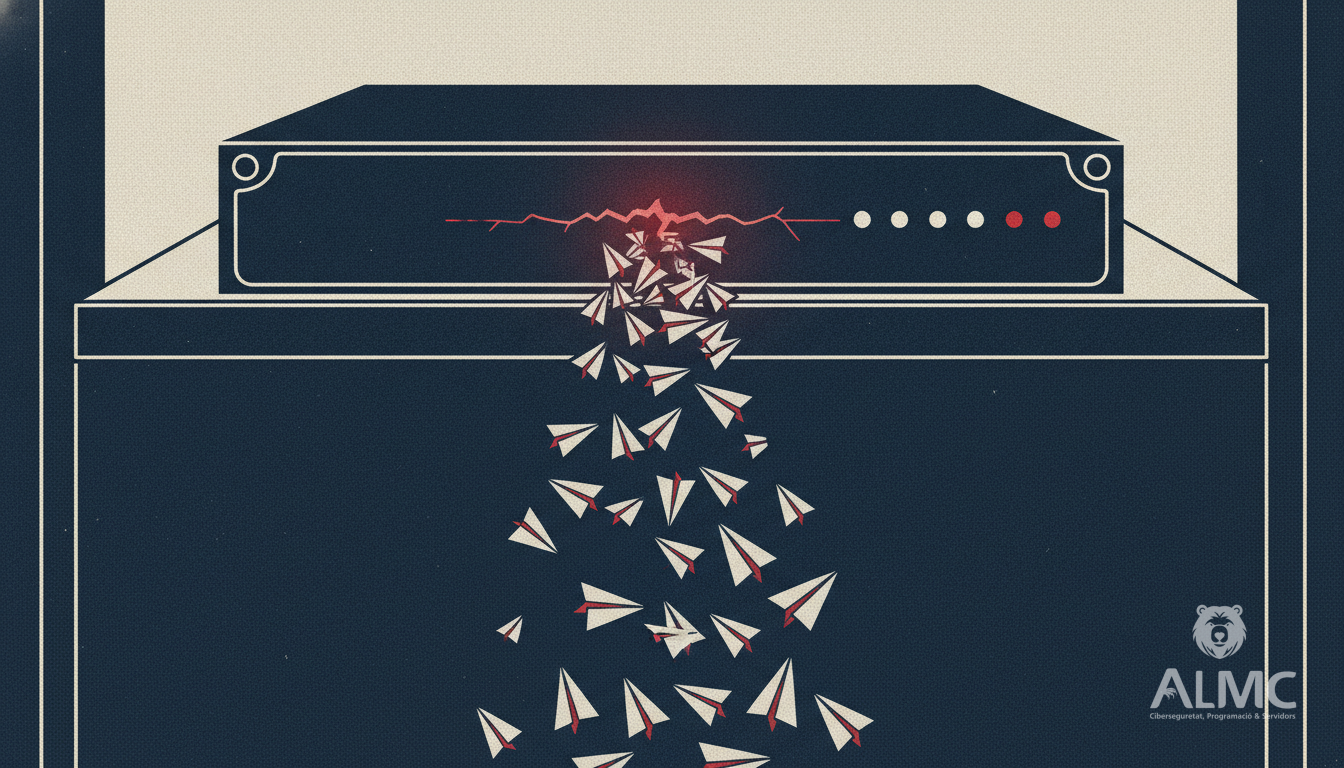
According to the NVD entry published on 28 October 2026, the root cause is a logic error that appears when secondary authentication is configured on a tunnel group. An unauthenticated, remote attacker can send a crafted request while connecting to the SSL remote access VPN, and a successful exploit causes the device to reload unexpectedly, producing a denial of service (DoS) condition.
The severity is CVSS 3.1 8.6 (HIGH), with the vector CVSS:3.1/AV:N/AC:L/PR:N/UI:N/S:C/C:N/I:N/A:H. In plain terms: it can be reached over the network, needs no credentials and no user interaction, and the impact is availability. Any organisation in Spain or Catalonia that terminates remote-access VPN connections on an ASA or FTD appliance should treat this as a priority, particularly where a small IT team cannot watch the estate around the clock.
Why it is urgent
This is not a theoretical flaw. CISA added CVE-2026-76418 to its Known Exploited Vulnerabilities (KEV) catalogue on 29 October 2026, which means it has been observed in real attacks. US federal agencies were given a remediation deadline of 1 November 2026.
CISA's required action is to apply mitigations in line with the vendor's instructions, in compliance with BOD 26-04 on prioritising security updates based on risk, and to follow its forensics triage requirements. Where mitigations are unavailable for cloud services, the guidance is to discontinue use of the product. CISA also reminds asset owners that they are responsible for assessing each asset's internet exposure.
One important nuance: the KEV entry does not record known use in ransomware campaigns. That does not make it harmless. A remote, unauthenticated DoS against the device that guards your perimeter can be used to disrupt operations, mask other activity or simply force repeated reloads at the worst possible moment. A short deadline from CISA is a useful signal for private organisations too, even though the mandate itself applies to federal agencies.
What to do today
- Confirm whether you run the affected product. Check your inventory for Cisco Secure Firewall ASA and FTD appliances, and identify the software version on each one. Pay special attention to devices with SSL remote access VPN enabled.
- Check whether secondary authentication is configured on any tunnel group. The NVD describes the flaw as arising from logic errors in that specific configuration, so this helps you judge exposure.
- Apply the update or mitigation described in Cisco's security advisory (cisco-sa-asaftd-tunnel-dos-s6mgkb75). The advisory is the authoritative source for which releases are affected and what the vendor recommends; follow it rather than assuming a fix version.
- Look for signs of intrusion. Unexpected device reloads, unexplained drops in VPN service and unusual connection attempts against the SSL VPN portal are worth investigating. CISA's forensics triage guidance is a reasonable reference for structuring that review.
- Reduce what is exposed to the internet. Restrict management interfaces and VPN portals to the addresses that genuinely need them, and review whether every internet-facing service on the appliance has to be reachable from anywhere.
- Keep the rest of the stack patched. Perimeter devices rarely fail alone; the same discipline applied to the web platforms behind them (WordPress, PrestaShop, Joomla) and to the servers hosting them closes far more doors than any single fix.
How a cybersecurity team such as ALMC's can help
For a pyme, an online shop or a company with a one-person IT department, keeping track of advisories like this one, mapping them against the real estate and acting before the deadline is a lot to ask on top of daily operations. That is the gap ALMC's cybersecurity work is built to fill: security audits and pentesting to find vulnerabilities before someone else does, server hardening, monitoring and incident response when something looks wrong, and maintenance and updating of WordPress, PrestaShop and Joomla installations, plus recovery of websites that have already been compromised.
In a case like CVE-2026-76418, that means helping you establish which appliances and versions you actually have, checking the configuration details the advisory highlights, planning the update window with the least disruption, and reviewing logs for signs that the flaw has already been used against you. The work is unglamorous and mostly preventive, which is precisely why it tends to be cheaper than the alternative.
Related
- Ivanti Connect Secure: CVE-2026-104935 Under Active Attack
- CVE-2026-96951: Windows Shell Command Injection Under Attack
- Click to Chat for WhatsApp: CVE-2026-92097 in WordPress
- Abuse Shield
Is your business exposed to flaws like this?
ALMC checks which versions you are running, applies the patches and hardens your servers and website. Contact our team for a security review.