
SonicWall SonicOS SSLVPN: SAML bypass under active attack
SonicWall SonicOS SSLVPN: SAML bypass under active attack
What CVE-2026-19868 is and who is exposedSonicWall's SonicOS SSLVPN service carries an authentication enforcement flaw tracked as CVE-2026-19868, offi...
What CVE-2026-19868 is and who is exposed
SonicWall's SonicOS SSLVPN service carries an authentication enforcement flaw tracked as CVE-2026-19868, officially named the SonicWall SonicOS SSLVPN Use of Single-factor Authentication Vulnerability. The root cause is classified as CWE-308, use of single-factor authentication.
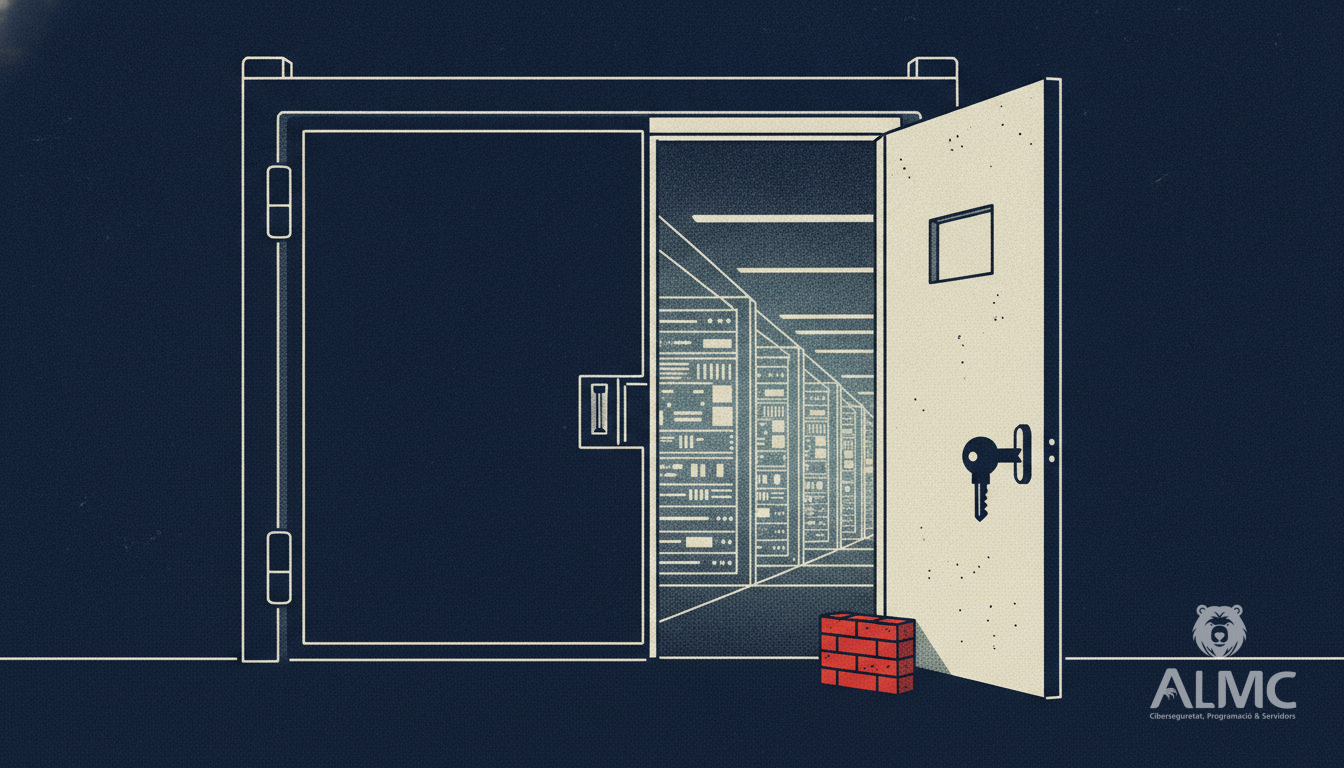
In practice, the weakness means that someone holding valid credentials for an alternative authentication method can slip past the SAML controls that are supposed to gate the VPN. Because SAML is often the layer where multi-factor authentication is enforced, a successful bypass can also defeat SAML-enforced MFA. The NVD published the record on 6 November 2026 and rates it CVSS 3.1 7.5, HIGH (vector CVSS:3.1/AV:N/AC:H/PR:N/UI:N/S:C/C:H/I:L/A:N).
That score deserves a plain reading: it is a serious, high-severity issue, not a critical one, and the high attack complexity reflects the need for valid credentials on some other authentication path. The impact on confidentiality is rated high, which fits a VPN concentrator sitting at the edge of a corporate network. Any organisation in Spain or Catalonia — a pyme in Lleida, an online shop in Barcelona, a logistics firm in Tarragona or Girona — that publishes SonicWall SSLVPN to the internet and relies on SAML plus MFA to protect remote access should treat this as its own problem until proven otherwise.
Why it is urgent: already exploited in real attacks
The decisive fact is not the score but the exploitation status. CISA added CVE-2026-19868 to its Known Exploited Vulnerabilities (KEV) catalogue on 6 November 2026, meaning there is confirmed evidence of exploitation in real attacks. This is not a theoretical flaw waiting for a proof of concept.
CISA set US federal agencies a remediation deadline of 20 November 2026 — a fortnight. The required action is to apply mitigations in line with the vendor's instructions, following BOD 26-04 guidance on prioritising security updates by risk and the agency's forensics triage requirements; where mitigations are unavailable, the guidance is to stop using the product. Owners are also told to assess each asset's internet exposure themselves.
Two points are worth stating precisely. First, the material does not record this CVE as used in ransomware campaigns, so there is no basis for claiming it is. Second, the short federal deadline is a useful proxy for everyone else: an authentication bypass on a remote-access gateway is exactly the kind of foothold that is used to move inward quietly, and a two-week window tells you how much patience the defenders are expected to have. Very little.
What to do today
- Inventory first. Confirm whether your organisation runs SonicWall SonicOS SSLVPN at all, and on which versions. Check with your IT team or hosting provider rather than assuming; edge appliances are frequently forgotten in asset lists.
- Apply the vendor's fix or mitigation. The authoritative source is SonicWall's PSIRT advisory SNWLID-2026-0014. The reference material does not state which version resolves the issue, so follow exactly what that advisory specifies rather than guessing a release number.
- Look for signs of intrusion. Because the flaw allows bypassing SAML and SAML-enforced MFA, review VPN authentication logs for sessions that authenticated through an alternative method, unusual source addresses, or access patterns that do not match the user. If you find anything, treat credentials as compromised and rotate them.
- Shrink what is exposed. If the SSLVPN portal does not need to be reachable from the whole internet, restrict it by source address or place it behind an additional control. Reducing the attack surface buys time while patching is scheduled.
- Do not stop at the appliance. An authentication bypass is a door, not a destination. Check what sits behind the VPN and whether anything unusual has been touched.
How a cybersecurity team like ALMC's fits in
For a small business with a two-person IT department, or an e-commerce operation running WordPress, PrestaShop or Joomla on its own servers, a KEV entry with a two-week clock lands in the middle of everything else. This is the kind of work ALMC handles routinely: security audits and pentesting to find the gaps before someone else does, server hardening, monitoring and incident response when something looks wrong, and the maintenance and patching discipline that keeps platforms current. When a site has already been hacked, the team also handles the cleanup and repair.
The value is not in reacting to a single CVE headline. It is in having someone who knows which assets face the internet, which versions are running, and what the vendor advisories actually say — so that the next entry on the KEV catalogue is a scheduled task rather than an emergency.
Related
- Ivanti Connect Secure: CVE-2026-104935 Under Active Attack
- CVE-2026-96951: Windows Shell Command Injection Under Attack
- Click to Chat for WhatsApp: CVE-2026-92097 in WordPress
- Abuse Shield
Is your business exposed to flaws like this?
ALMC checks which versions you are running, applies the patches and hardens your servers and website. Contact our team for a security review.