
Abuse Shield: Centralised Server Protection for SMEs
Abuse Shield: Centralised Server Protection for SMEs
Why scattered defences no longer holdFor years, many small and mid-sized organisations in Catalonia have protected their servers the same way: one mac...
Why scattered defences no longer hold
For years, many small and mid-sized organisations in Catalonia have protected their servers the same way: one machine at a time. A firewall here, a manual block there, a colleague who remembers to check the logs on a Friday afternoon. That approach worked while attacks were slow, opportunistic and easy to spot. It does not work today.
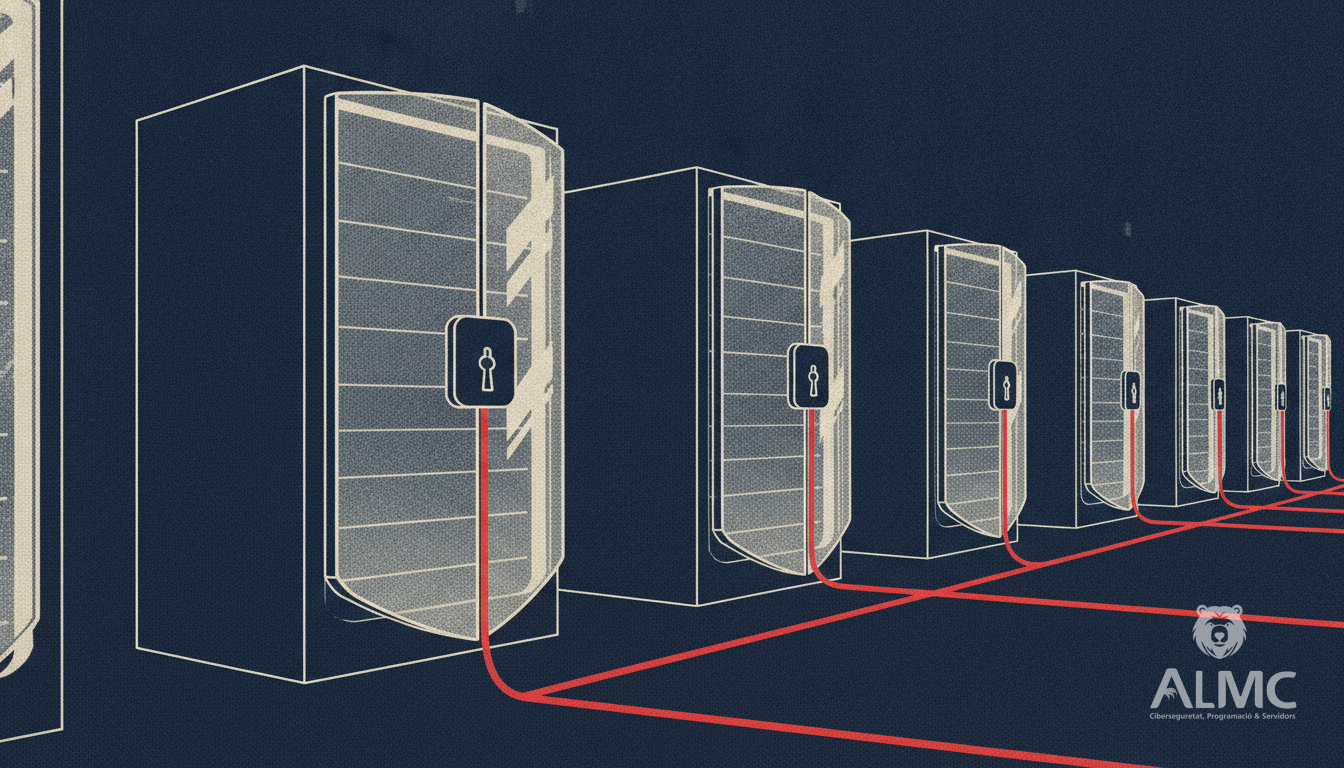
The threat landscape is accelerating, and artificial intelligence is a large part of the reason. Attackers now use automation to scan, probe and exploit at a speed no human team can match, and every new AI tool a business adopts widens the surface they can target. Chatbots, coding assistants and internal agents all touch sensitive data and systems, often with more permissions than they need. Meanwhile, many SMEs admit they have no formal policy governing that exposure. The result is a familiar pattern: more entry points, less oversight, and security teams stretched thinner than ever.
You do not need an unlimited budget to respond to this. You need defences that are simple to understand, quick to deploy and consistent across every machine you run.
What Abuse Shield does
Abuse Shield is our managed protection layer for servers, built for system administrators, hosting providers and SMEs that run their own infrastructure. Instead of configuring and monitoring each machine in isolation, it brings protection together in one place:
- Automatic blocking of malicious IPs. Suspicious sources are identified and blocked without waiting for someone to read a log file.
- Managed fail2ban across multiple machines. The same proven intrusion-prevention tool, configured and maintained centrally, so every server follows the same rules.
- A shared IP reputation feed. When one of your servers detects an abusive address, every server in your fleet learns about it. An attacker blocked on your Barcelona front end is blocked on your Lleida database before it even tries.
That last point matters more than it first appears. Attackers rarely hit a single target once. They rotate across your infrastructure looking for the weakest node. A shared reputation feed turns isolated machines into a single defensive organism, so a lesson learned in one place protects the whole estate.
Built for teams without a security department
Most SMEs in Girona or Tarragona do not have a dedicated SOC. They have one or two capable administrators who already juggle backups, deployments and support tickets. Abuse Shield is designed for that reality. Configuration is centralised, so you are not logging into ten servers to apply the same rule ten times. Fail2ban is managed for you, which removes a common source of drift and misconfiguration. And because the reputation feed is shared, the marginal effort of adding a new server is close to zero.
For hosting companies, the benefit compounds. Each client machine you onboard strengthens the collective intelligence of the network, and the protection scales with your fleet rather than your headcount.
Automation with a human safety net
Automation is essential, but it should not be blind. Abuse Shield automates the repetitive, high-volume work — detecting, blocking, sharing reputation — while leaving judgement calls to your team. That balance matters: automated systems handle the noise, and people handle the decisions that need context. It is the same principle now shaping security strategies across Europe, and it is the one we build around.
Compliance and data protection
For organisations operating under GDPR, centralised logging and consistent access controls make it easier to demonstrate that you take security seriously. Abuse Shield keeps your protection policy uniform across servers, which simplifies audits and reduces the risk of an unmanaged machine slipping through the cracks. Data stays within your infrastructure and under your control.
Where to start
You do not need to migrate everything at once. Begin with the servers that face the internet — web front ends, mail gateways, remote access points — and let the shared reputation feed do its work. From there, expand to internal machines as your confidence grows. The goal is a single, coherent shield around your infrastructure, maintained in one place, learning from every server you add.
If your team is spending evenings reading firewall logs or repeating the same fail2ban setup on every new machine, that is a sign the model needs to change. Centralised protection is not a luxury reserved for large enterprises. For SMEs and hosting providers across Catalonia, it is becoming the practical baseline.
Related
- How to Harden Your Servers with Fail2ban and IP Reputation Feeds
- Fail2ban: Your First Line of Defense Against Unauthorized Server Access
- Critical libssh2 flaw: urgent patch for SSH servers
- Desarrollo web
Put these ideas into practice
Talk to ALMC about a solution for your business. Explore your options or contact our team.