
Abuse Shield: Centralised Server Protection for Catalan SMEs
Abuse Shield: Centralised Server Protection for Catalan SMEs
Why isolated server defences are no longer enoughRecent investigations into state-aligned threat actors have shown how quickly a single compromised en...
Why isolated server defences are no longer enough
Recent investigations into state-aligned threat actors have shown how quickly a single compromised endpoint can escalate into a destructive incident. In one documented case, an initial phishing email led to a backdoor that hid its command-and-control traffic inside a decentralised mesh network, and weeks later the same access was handed over to a group that wiped data across the victim's infrastructure. The lesson for system administrators in Barcelona, Lleida, Tarragona and Girona is clear: attackers do not stop at the perimeter, and they do not respect the boundaries between your machines.
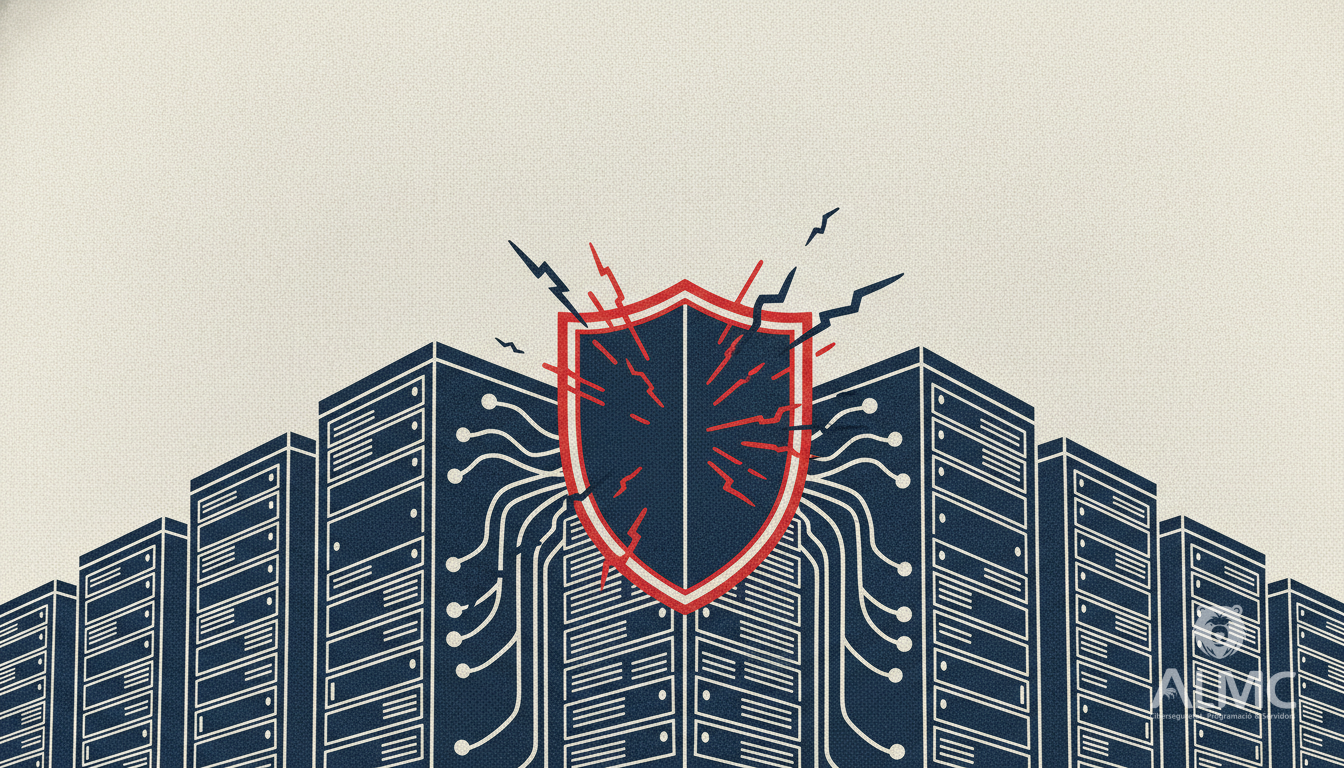
Most small and medium-sized businesses in Catalonia run a handful of servers — perhaps a web front end, a database, a mail relay and a couple of internal applications. Each one usually has its own firewall rules and, if you are diligent, its own fail2ban installation. The problem is that these defences operate in isolation. An IP that hammers your SSH port on one server is often probing your other servers minutes later, yet each machine has to learn that lesson from scratch.
What Abuse Shield changes
Abuse Shield is ALMC's managed protection service for organisations that own their servers. Instead of configuring fail2ban separately on every machine, you centralise the work: malicious IPs are blocked automatically, fail2ban is managed across multiple machines from a single point, and a shared reputation feed circulates what one server learns to all the others.
- Automatic IP blocking: repeated failed logins, abusive request patterns and known-bad addresses are blocked without waiting for a human to intervene.
- Managed fail2ban at scale: jails, thresholds and ban durations are kept consistent across your fleet, so a change made once applies everywhere.
- Shared reputation feed: when one server detects an abusive IP, the rest of your infrastructure is warned and can block it pre-emptively.
- Visibility for small teams: a clear view of what is being blocked and why, without needing a dedicated security operations centre.
Built for the way Catalan SMEs actually work
Hosting companies in Lleida or Barcelona often manage dozens of customer machines with a small technical team. A shared reputation feed is particularly valuable there: a brute-force campaign against one customer's VPS immediately hardens every other VPS on the same account. For an SME with two or three own servers, the benefit is simpler — you stop repeating the same configuration work and you stop missing attacks that only appear on the machine nobody was watching that week.
Because Abuse Shield works with fail2ban, it fits naturally into existing Linux estates. There is no need to rip out your current firewall or reverse proxy; the service layers on top of what you already run and adds the coordination that was missing.
Security, GDPR and the Spanish context
Blocking malicious IPs is a legitimate security measure under the GDPR, but it still needs to be done with care. Abuse Shield is designed so that logs and reputation data are handled within a clear operational framework, with retention and access controls that support your own record-keeping obligations. For companies handling personal data — which, in practice, means almost every business in Spain — this matters: a security incident that exposes customer data can trigger notification duties and significant fines.
The threat landscape described in recent research also underlines why perimeter defences alone are insufficient. Backdoors that tunnel through mesh networks, SOCKS5 proxies deployed after initial access and data-wiping utilities pushed via Active Directory are all techniques that bypass simple port-based filtering. Centralised reputation and consistent fail2ban management will not stop a determined state actor on their own, but they raise the cost of the early, noisy stages of an intrusion — the brute-force attempts, the credential stuffing and the automated scanning that so often precede a targeted attack.
Getting started without disrupting operations
Rolling out Abuse Shield is deliberately incremental. The usual path is to connect your most exposed servers first — the ones with public SSH, mail or web services — and let the shared feed begin learning. From there, additional machines can be added as your team's confidence grows. Because the service is managed, you are not left maintaining a complex fail2ban configuration on your own; ALMC handles the tuning and the coordination while your team keeps control of the infrastructure.
For hosting providers and SMEs across Catalonia, the appeal is straightforward: fewer repetitive tasks, faster reaction to abuse and a security posture that improves with every server you add to the network. If your servers currently defend themselves one by one, centralising that effort is one of the highest-leverage changes you can make this year.
Related
- How to Harden Your Servers with Fail2ban and IP Reputation Feeds
- Fail2ban: Your First Line of Defense Against Unauthorized Server Access
- Critical libssh2 flaw: urgent patch for SSH servers
- Desarrollo web
Put these ideas into practice
Talk to ALMC about a solution for your business. Explore your options or contact our team.