
Server security maturity: beyond firewalls and backups
Server security maturity: beyond firewalls and backups
Why having the right tools is not the same as being protectedMost organisations in Spain and across Europe now run a firewall, keep regular backups an...
Why having the right tools is not the same as being protected
Most organisations in Spain and across Europe now run a firewall, keep regular backups and feel reasonably safe. That confidence is understandable, but it is also where the trouble starts. A firewall protects the perimeter and backups guarantee recovery, yet neither tells you what is happening inside your infrastructure right now. You can lock every door in the building and still fail to notice that someone has been walking the corridors for weeks.
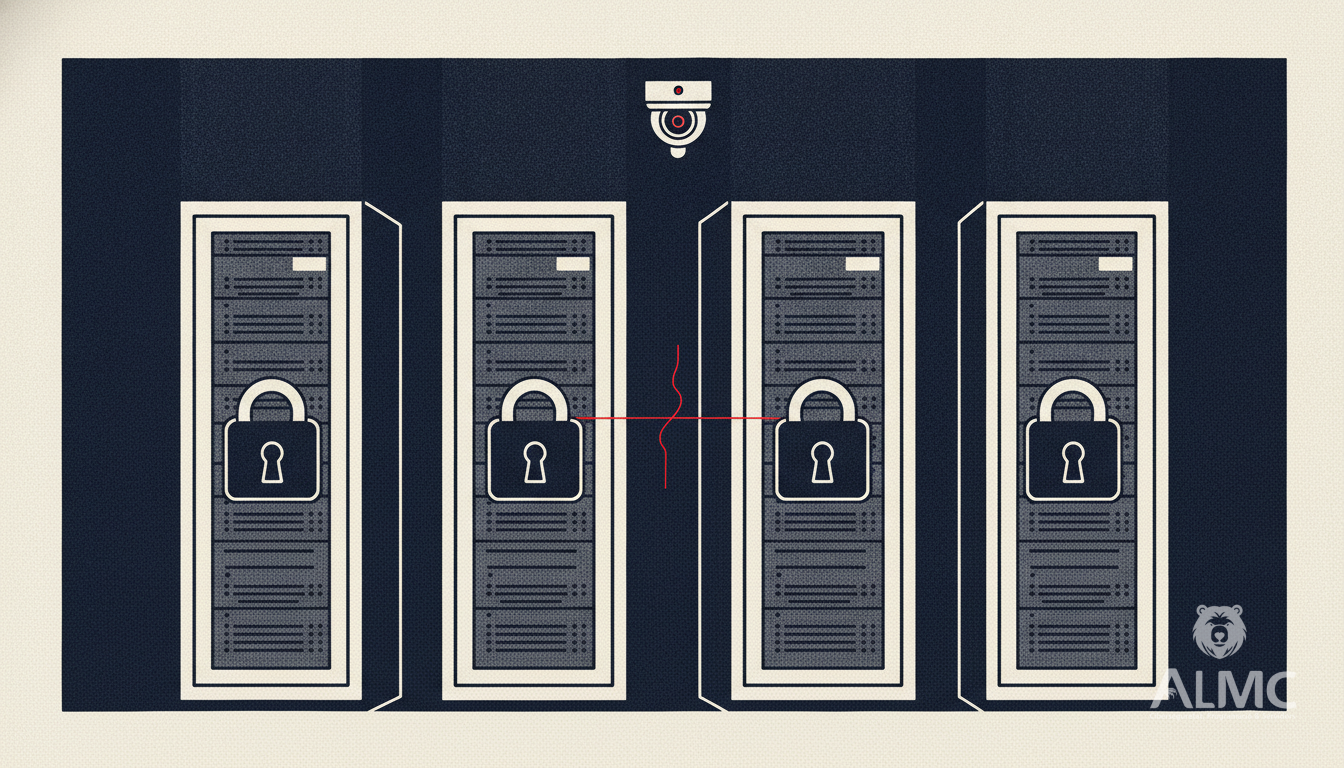
This is the gap between looking secure and being secure. Perimeter tools are largely preventive; backups are reactive. Neither of them watches behaviour, spots anomalies or reacts in real time when a machine starts behaving strangely. Maturity in security is not measured by how many products you have installed, but by your ability to detect, understand and respond.
The uncomfortable question every sysadmin should ask
If an attacker were already inside your network at this very moment, would you know? For many small and mid-sized companies in Catalonia running their own servers, the honest answer is no. Logs pile up on each machine, nobody reads them consistently, and a brute-force attempt on one host is invisible to the rest of the fleet.
Industry surveys repeatedly show the same pattern: perimeter protection is nearly universal, while analytical capabilities such as threat intelligence or multi-factor authentication lag far behind. The lesson is not that companies lack budget, but that they confuse installation with defence. A tool sitting idle on a server protects nobody.
Where the real exposure sits for SMEs and hosting providers
Servers exposed to the internet are scanned constantly. Automated bots try SSH logins with lists of stolen credentials, probe web panels for weak passwords and hammer APIs looking for misconfigurations. These are not sophisticated targeted attacks; they are cheap, continuous and indiscriminate. What makes them dangerous is volume and persistence.
- Repetitive brute-force attempts against SSH, FTP or admin panels, often from rotating IP addresses.
- Credential stuffing using passwords leaked in unrelated breaches, which is why MFA matters so much.
- Distributed sources where each individual IP looks harmless, so per-machine blocking never sees the pattern.
- Fragmented visibility across several servers, where each one defends itself in isolation.
Under GDPR, a compromised server holding personal data is not just an operational headache; it can trigger notification obligations and significant exposure. In Spain, the AEPD expects organisations to demonstrate appropriate technical measures, and "we had a firewall" is rarely a sufficient answer.
Fail2ban is powerful, but only if it is managed properly
Fail2ban is one of the most effective and lightweight defences available: it watches log files, detects repeated failed logins and temporarily blocks the offending IP at the firewall level. The problem is rarely the software itself. It is everything around it.
On a single machine, configuring jails, tuning thresholds and keeping rules up to date is manageable. Across five, ten or fifty servers, it becomes a maintenance burden that quietly slips. Rules drift, exceptions get forgotten, and blocks expire without anyone reviewing whether they should. Meanwhile, an IP that attacked one server is free to try its luck on the next one, because no machine knows what the others have learned.
Centralised protection: what Abuse Shield changes
This is the gap that ALMC's Abuse Shield is designed to close. Rather than treating each server as an island, it centralises protection across your whole fleet and turns isolated defences into a coordinated one.
- Automatic blocking of malicious IPs, applied consistently across every protected machine without manual intervention.
- Managed fail2ban at scale: configuration, thresholds and rules maintained centrally, so no server falls behind.
- A shared IP reputation feed between all your servers. When one host detects an abusive address, the others already know about it.
The practical effect is simple: the effort you invest in defending one machine strengthens all of them. For hosting companies managing dozens of customer servers, or for an SME in Lleida or Tarragona with a small internal team, this is the difference between firefighting and having a system that learns.
From reactive to coordinated defence
Real security maturity means shifting from isolated tools to shared intelligence. A firewall still matters, backups still matter, but they should sit on top of a layer that observes, decides and acts automatically. Centralised IP reputation is a practical, affordable step in that direction: it reduces noise, shortens response time and removes the repetitive manual work that no sysadmin enjoys.
If your servers are still defending themselves one by one, it may be time to ask whether your protection is genuinely coordinated, or simply present.
Related
- How to Harden Your Servers with Fail2ban and IP Reputation Feeds
- Fail2ban: Your First Line of Defense Against Unauthorized Server Access
- Critical libssh2 flaw: urgent patch for SSH servers
- Desarrollo web
Put these ideas into practice
Talk to ALMC about a solution for your business. Explore your options or contact our team.