
Abuse Shield: Centralised Server Security for Your Infrastructure
Abuse Shield: Centralised Server Security for Your Infrastructure
Why scattered defences failMost small and mid-sized organisations in Catalonia run more than one server. A web front end in Barcelona, a database in L...
Why scattered defences fail
Most small and mid-sized organisations in Catalonia run more than one server. A web front end in Barcelona, a database in Lleida, a mail relay in Girona, perhaps a staging box in Tarragona. Each machine usually has its own firewall rules, its own log files and, if you are lucky, its own fail2ban installation. The problem is that these defences do not talk to each other. An attacker who is blocked on one host is free to try the same credentials on the next one, and nobody notices until something breaks.
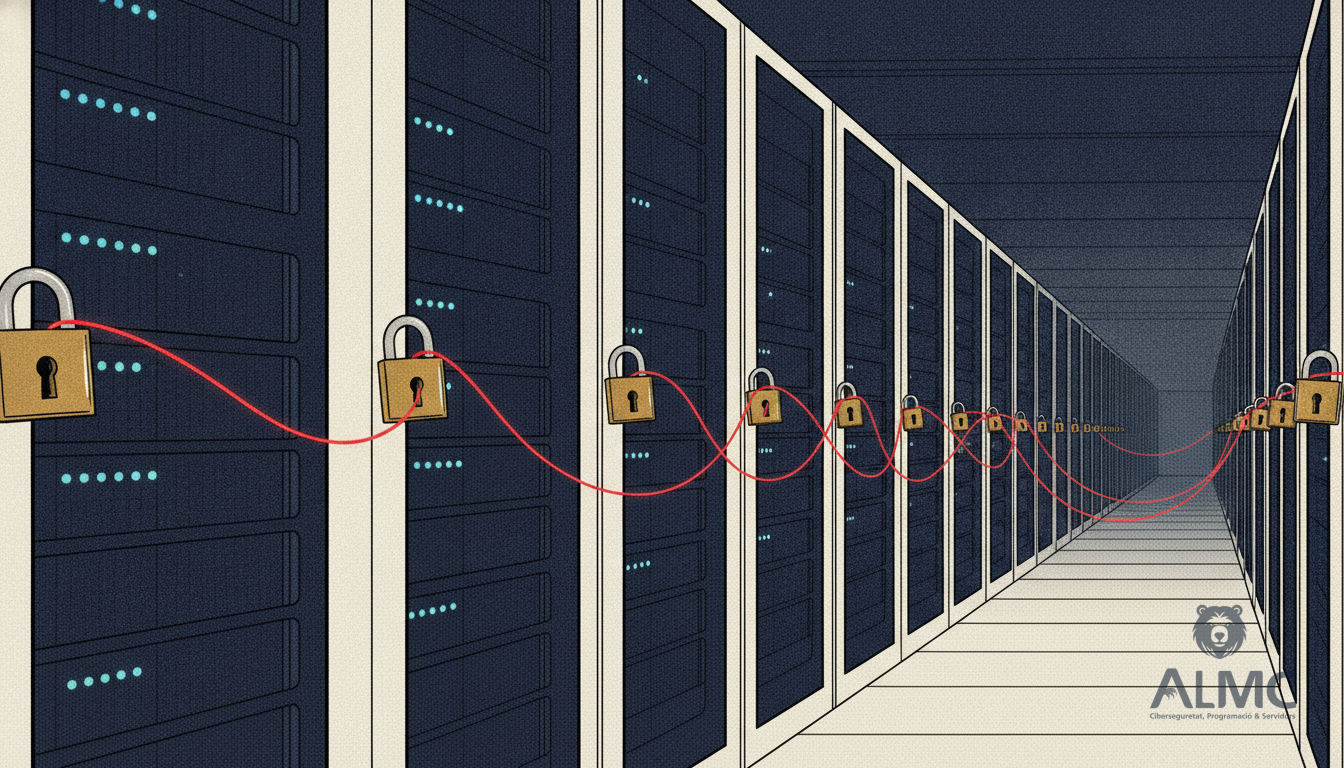
This is the gap that Abuse Shield is designed to close. Instead of treating each server as an isolated island, it centralises protection so that every machine benefits from what the others learn.
What Abuse Shield actually does
At its core, Abuse Shield combines three capabilities that are usually managed separately, and often badly:
- Automatic blocking of malicious IPs. Suspicious behaviour is detected and the offending address is blocked without waiting for an administrator to intervene at three in the morning.
- Managed fail2ban across multiple machines. The classic fail2ban tool is powerful but tedious to maintain at scale. Abuse Shield handles the configuration, synchronisation and upkeep so that policies stay consistent across your fleet.
- A shared IP reputation feed. When one server identifies a hostile address, that intelligence is distributed to all the others. The first machine to be attacked effectively immunises the rest.
The result is a defence that gets stronger as your infrastructure grows, rather than more fragmented.
Who benefits most
System administrators who are tired of duplicating firewall rules will appreciate the consistency. Hosting companies managing dozens or hundreds of customer servers gain a single point of control and a reputation feed that improves with every incident. And small businesses with their own servers, perhaps a CRM, an e-commerce platform and a couple of internal applications, finally get enterprise-grade protection without hiring a dedicated security team.
For organisations in Spain, this also aligns with GDPR obligations. Article 32 requires appropriate technical measures to protect personal data, and demonstrating that you block abusive traffic and maintain logs of security incidents is a practical way to show due diligence. A centralised system makes that evidence easier to collect and present.
How it fits into your daily operations
One of the most common objections to security tooling is that it creates more work than it saves. Abuse Shield is built around the opposite idea. Because fail2ban is managed for you, there is no need to hand-craft jails on every new server or worry that an update will silently break a rule. Because the reputation feed is shared, you spend less time investigating the same scanner that hits every host in your estate.
Administrators keep visibility and control, but the repetitive work is removed. Alerts are meaningful rather than noisy, and blocking decisions happen automatically according to policies you define. If a legitimate customer or partner is caught by mistake, the centralised view makes it straightforward to review and whitelist the address across the whole fleet in one step.
Practical considerations before you deploy
As with any security change, a little planning goes a long way. Start by inventorying your servers and identifying which ones face the public internet. Review your current fail2ban rules, if any, and decide which behaviours should trigger a block. Think about how long an address should stay blocked and whether you want temporary or permanent bans for repeat offenders.
It is also worth agreeing internally who can review and override blocks, and how incidents will be documented. This is not bureaucracy for its own sake: clear procedures make it much easier to respond calmly when something does happen, and they strengthen your position if a data protection authority ever asks how you manage risk.
A simpler way to sleep at night
Server security does not have to mean juggling a dozen disconnected configurations. Centralising protection around automatic blocking, managed fail2ban and a shared reputation feed turns a patchwork of defences into a coherent system. For administrators and hosting providers across Catalonia, that means fewer late-night surprises and more confidence that every machine is protected by the lessons learned from all the others.
Related
- How to Harden Your Servers with Fail2ban and IP Reputation Feeds
- Fail2ban: Your First Line of Defense Against Unauthorized Server Access
- Critical libssh2 flaw: urgent patch for SSH servers
- Desarrollo web
Put these ideas into practice
Talk to ALMC about a solution for your business. Explore your options or contact our team.