
Server Security in Spain: Centralised IP Blocking with Abuse Shield
Server Security in Spain: Centralised IP Blocking with Abuse Shield
Why server security is no longer a per-machine jobIf you run servers for a hosting company, an SME or your own infrastructure, you already know the da...
Why server security is no longer a per-machine job
If you run servers for a hosting company, an SME or your own infrastructure, you already know the daily rhythm: someone, somewhere, is trying to log in. Brute-force attempts against SSH, credential stuffing against web panels, scrapers hammering your endpoints and bots probing for forgotten staging environments. In Catalonia and across Spain, we see the same pattern on machines hosted in Barcelona, Lleida, Tarragona and Girona data centres alike: the attacks are constant, automated and indifferent to the size of your business.
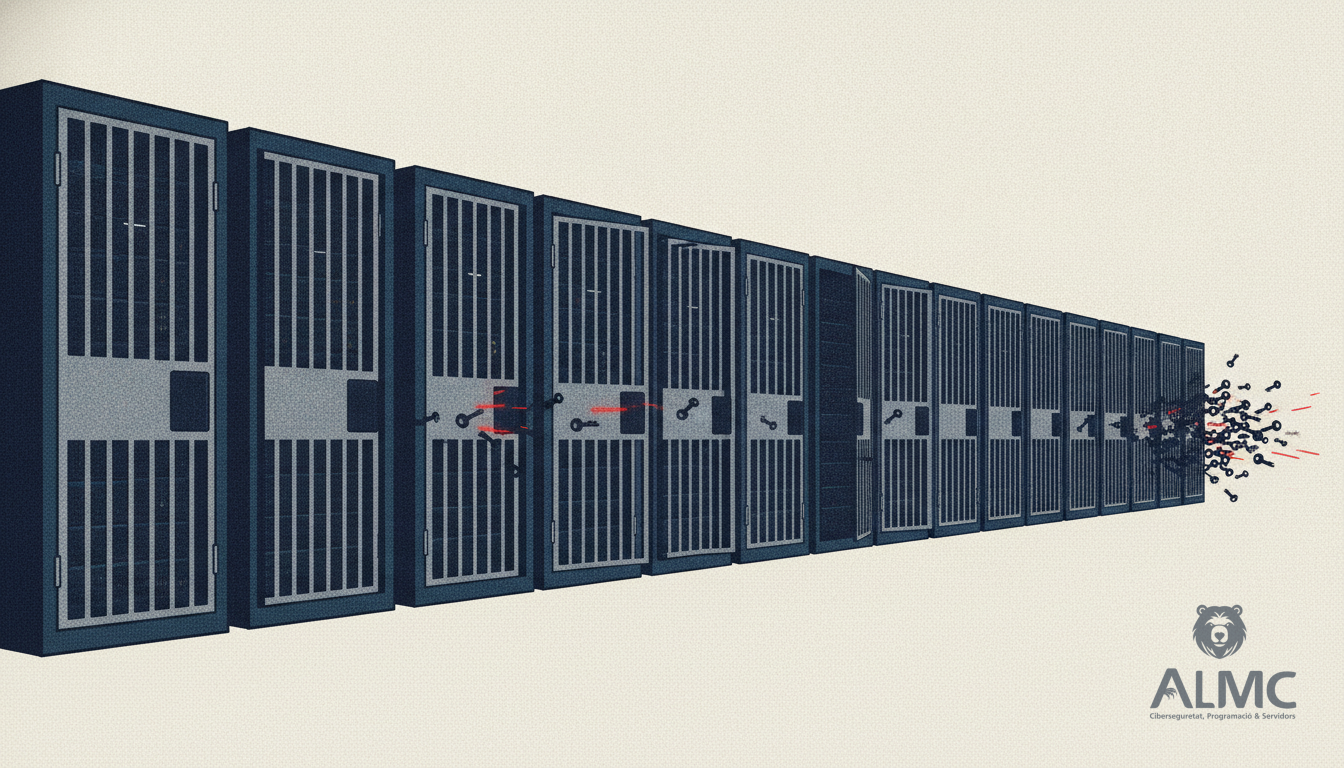
The traditional answer has been fail2ban on each server. It works, but it only ever sees what happens on the machine where it runs. The attacker who is banned on server A is still perfectly welcome on servers B, C and D. Multiply that by dozens of instances and you end up with a fragmented defence, duplicated configuration and a lot of manual work that nobody has time for.
The real cost of fragmented protection
Managing security machine by machine creates three problems that compound over time:
- Blind spots. Each server builds its own isolated picture of who is attacking. Patterns that are obvious when you look at the whole fleet are invisible locally.
- Operational drag. Every new server means copying rules, tuning thresholds and hoping nothing drifts out of sync. When a rule changes, someone has to remember every machine it applies to.
- Slow reaction. By the time you notice a coordinated campaign and update each host individually, the attacker has already moved on to the next target.
None of this is a failure of fail2ban itself. It is a failure of architecture. The tool is sound; the way we deploy it at scale is not.
What Abuse Shield changes
Abuse Shield is ALMC's answer to that architectural gap. Instead of treating each server as an island, it centralises protection and turns your fleet into a single, coordinated defensive unit. The core idea is simple: what one server learns, every server knows.
Three capabilities make that happen:
- Automatic blocking of malicious IPs. Suspicious behaviour is detected and blocked without waiting for a human to intervene. Repeat offenders are cut off before they can escalate.
- Managed fail2ban across multiple machines. Rules, thresholds and bans are administered from one place and applied consistently to every server, whether you run three instances or three hundred.
- A shared IP reputation feed. When an address is flagged on one machine, that intelligence propagates across the whole fleet. A ban earned on a web server in Barcelona protects the database host in Lleida, the mail server in Girona and the application node in Tarragona.
Who benefits most
Abuse Shield is designed for the people who actually carry the pager. System administrators get a single control plane instead of a spreadsheet of hosts. Hosting companies can offer a stronger security baseline to their clients without multiplying their workload. SMEs with their own servers finally get enterprise-grade coordination without hiring a dedicated security team.
The shared reputation feed is where the model really pays off. The more servers you connect, the more attack surface you observe, and the faster the whole fleet becomes at recognising hostile traffic. It is a network effect in your favour rather than the attacker's.
Compliance, GDPR and the Spanish context
For organisations operating under GDPR, logging and blocking decisions are not just technical matters. You need to know what was blocked, why, and be able to demonstrate that your measures are proportionate. Centralising the configuration makes that far easier: policies are defined once, documented once and enforced everywhere. That clarity is valuable when a client asks how their data is protected, or when a processor agreement needs to reflect real, verifiable controls rather than good intentions.
It also matters commercially. Spanish SMEs and hosting providers compete on trust. Being able to say that malicious traffic is blocked automatically, that IP reputation is shared across your infrastructure and that fail2ban is centrally managed is a concrete, defensible answer to a very common question.
Getting started without a big-bang migration
You do not need to rebuild your infrastructure overnight. A sensible path is to connect your most exposed servers first, typically the ones facing the public internet, and let the reputation feed start learning. From there, expand to internal and secondary machines at your own pace. Because the management layer is centralised, each new server inherits the accumulated intelligence rather than starting from zero.
The goal is not more tools. It is fewer places to look, fewer things to remember and a defence that gets stronger as your infrastructure grows. That is the shift from managing incidents to managing posture, and it is where server security stops being a chore and starts being an asset.
Related
- How to Harden Your Servers with Fail2ban and IP Reputation Feeds
- Fail2ban: Your First Line of Defense Against Unauthorized Server Access
- Critical libssh2 flaw: urgent patch for SSH servers
- Desarrollo web
Put these ideas into practice
Talk to ALMC about a solution for your business. Explore your options or contact our team.