
Abuse Shield: Centralised Server Protection and Shared IP Reputation
Abuse Shield: Centralised Server Protection and Shared IP Reputation
Trust is the weakest link in any networkMost security incidents we investigate for clients in Barcelona, Lleida, Tarragona and Girona do not begin wit...
Trust is the weakest link in any network
Most security incidents we investigate for clients in Barcelona, Lleida, Tarragona and Girona do not begin with a clever exploit. They begin with a legitimate mechanism being used by someone who should never have been allowed to use it. The attacker does not need to break the door down; they only need the infrastructure to believe they belong inside. That is the uncomfortable lesson behind recent telecom surveillance research, and it applies just as well to the servers sitting in your rack.
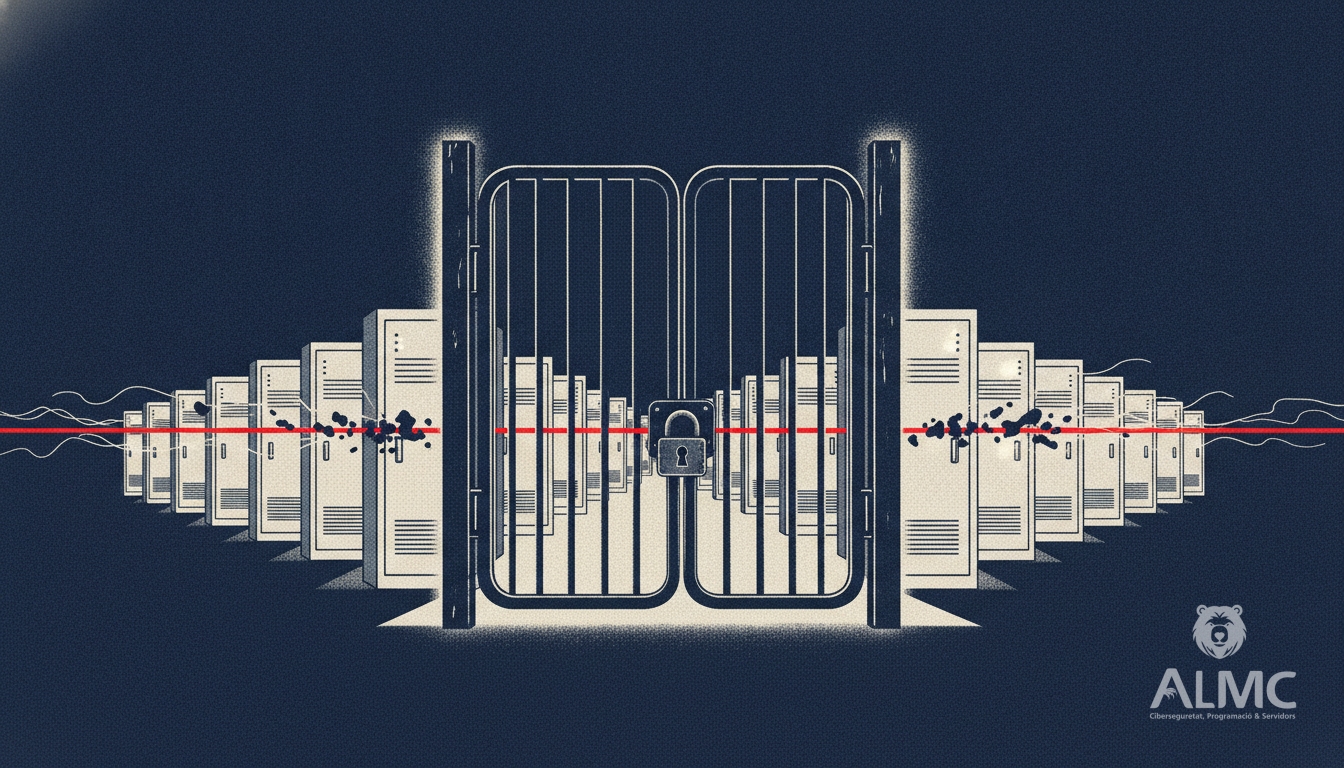
When a system accepts a request because the caller presents a trusted identity, the protocol can work perfectly and the outcome can still be a breach. The same logic governs SSH, mail, web and database services: a valid credential, a familiar header or a plausible source address is often enough to pass the first line of defence. Security teams therefore need to watch not only what is broken, but who is asking, from where, and how often.
Why per-server blocking is no longer enough
Many small and mid-sized organisations in Catalonia run between three and thirty servers: a couple of web front ends, a database, a mail relay, a VPN gateway, a few staging machines. Each one is usually protected in isolation. An administrator installs fail2ban on one box, tweaks the rules, and repeats the exercise months later on another. The result is a patchwork of policies, inconsistent thresholds and log files nobody reads until something goes wrong.
The weakness of this approach is not fail2ban itself. It is the lack of memory. When an attacker hammers one server, gets blocked, and moves to the next machine on the same subnet, the second server has no idea that the same address was already rejected minutes earlier. Every machine learns the same lesson from scratch, and the attacker simply rotates targets until one door is left ajar.
What Abuse Shield changes
Abuse Shield is our answer to that fragmentation. It centralises protection across your servers instead of treating each one as an island:
- Automatic malicious IP blocking. Suspicious addresses are blocked without waiting for a human to read a log or write a rule.
- Managed fail2ban across multiple machines. Jails, thresholds and ban durations are configured and kept consistent from one place, so a policy change reaches every server at once.
- A shared reputation feed between all your servers. When one machine detects an abusive address, the rest of the fleet learns about it immediately.
In practice, this turns a collection of separate defences into a single coordinated perimeter. An address that probes your mail server in the morning is already known to your web server by the afternoon. For hosting companies managing dozens of customer environments, or for a company with its own infrastructure in a Lleida data centre, that shared memory is the difference between reacting and anticipating.
Designed for administrators, not for dashboards
Abuse Shield is built for people who actually run systems: sysadmins, hosting providers and SMEs with their own hardware. That means it respects the way you already work. It does not force you to abandon your existing firewall rules or rewrite your deployment scripts. It sits alongside your current stack, keeps fail2ban under control and gives you a coherent view of what is being blocked and why.
Reputation also matters beyond your own walls. A server that repeatedly allows abusive traffic can end up on external blocklists, damaging deliverability and customer trust. By filtering known bad actors early, you reduce the risk of your IP ranges being associated with abuse you never intended to host. This is particularly relevant under GDPR, where a documented, proportionate security measure helps demonstrate that you take the protection of personal data seriously.
From reactive patching to shared intelligence
The telecom case is a reminder that attackers are comfortable abusing trust rather than breaking it. On your own infrastructure, the equivalent move is to stop treating each server as an independent defender and start treating your fleet as one organism. Abuse Shield gives you that shared nervous system: automatic blocking, centrally managed fail2ban and a reputation feed that grows more useful with every machine you add.
If you manage servers in Catalonia or across Spain and you are tired of repeating the same hardening work on every box, it is worth looking at what a coordinated layer could remove from your daily routine. Fewer alerts, fewer repeated bans and one consistent policy across the estate.
Related
- How to Harden Your Servers with Fail2ban and IP Reputation Feeds
- Fail2ban: Your First Line of Defense Against Unauthorized Server Access
- Critical libssh2 flaw: urgent patch for SSH servers
- Desarrollo web
Put these ideas into practice
Talk to ALMC about a solution for your business. Explore your options or contact our team.