
Blog
Juniper Session Smart: critical CVE-2026-103406 under attack
What it is and who is affectedHewlett Packard Enterprise (HPE) Juniper Session Smart Conductor and Session Smart Router carry a critical OS command in...
What it is and who is affected
Hewlett Packard Enterprise (HPE) Juniper Session Smart Conductor and Session Smart Router carry a critical OS command injection flaw tracked as CVE-2026-103406. According to the NVD of the NIST, the weakness sits in the AutomatedProvisioner component of Session Smart Conductor and falls under CWE-78: an improper neutralisation of special elements used in an OS command. In plain terms, a remote attacker can send a specially crafted salt minion ID and have it executed as root.
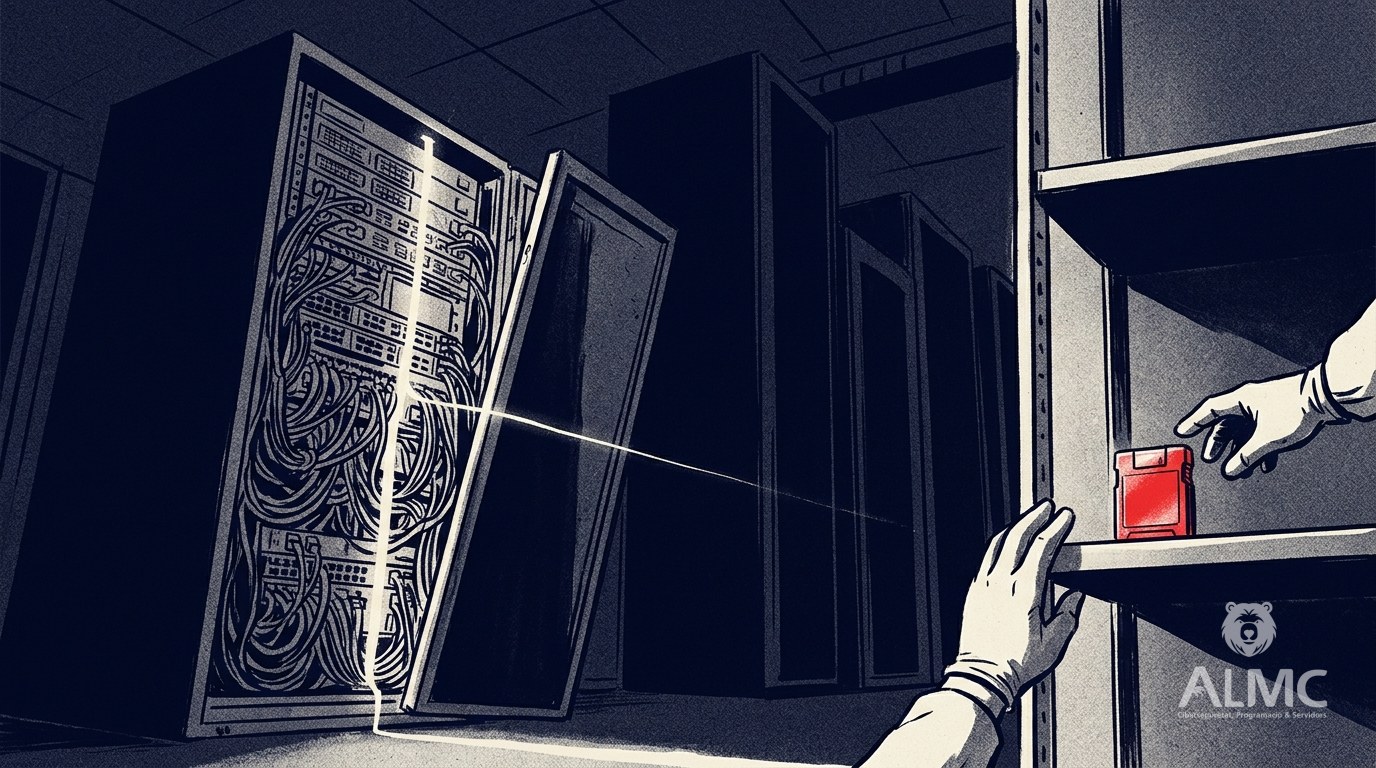
The severity is CVSS 3.1 9.8, critical, with a vector of AV:N/AC:L/PR:N/UI:N/S:U/C:H/I:H/A:H. No privileges and no user interaction are needed, and the impact on confidentiality, integrity and availability is high across the board. The NVD published the record on 28 October 2026.
Affected Session Smart Conductor versions, as listed by the NVD, are:
- Up to 7.0.5-14-lts (excluded).
- From 7.1.0-50r1 (included) up to 7.1.7-15-sts (excluded).
- From 7.2.0-29r1 (included) up to 7.2.3-8r2 (excluded).
These are not consumer devices. Session Smart is the kind of infrastructure that sits at the edge of a network, often in branches, data centres or managed service environments, and it is frequently reachable from the internet. For a Spanish pyme, ecommerce or small IT team running its own kit, that combination of internet exposure and root-level execution is about as bad as it gets.
Why it is urgent: it is already being exploited
This is not a theoretical flaw waiting for a proof of concept. CISA added CVE-2026-103406 to its Known Exploited Vulnerabilities (KEV) catalogue on 25 November 2026, which means there is confirmed exploitation in real attacks. CISA gave US federal agencies until 28 November 2026 to apply mitigations in line with vendor instructions, following its BOD 26-04 guidance on prioritising security updates by risk, and its forensics triage requirements.
The catalogue does not record this CVE as used in ransomware campaigns, so we should not claim otherwise. That said, a root-level remote command injection with public exploitation is a gift to any attacker, ransomware crew or not. The window between a KEV listing and mass scanning is measured in hours, not weeks.
One detail matters for anyone outside the US federal sphere: the CISA deadline is a signal, not a legal obligation for a company in Lleida or Barcelona. But the risk calculation is the same, and under GDPR a compromise that exposes personal data brings its own notification duties and potential fines.
What to do today
The first step is inventory. Check whether your organisation runs Session Smart Conductor or Session Smart Router, and pin down the exact version. Version numbers matter here: the affected ranges are narrow and the boundaries are easy to misread, so compare against the list above rather than assuming a recent build is safe.
Next, apply the update or mitigation described in the vendor advisory, JSA112183, published on the Juniper support portal. If the advisory does not spell out a fixed release for your branch, follow whatever it instructs rather than guessing a version number. CISA's own guidance is explicit: apply mitigations per vendor instructions, and if no mitigation is available for a given deployment, discontinue use of the product.
Then look for signs of intrusion. Because the flaw allows commands to run as root, a compromised appliance may show unexpected processes, unfamiliar accounts, altered configuration or outbound connections that nobody can explain. Review logs around the provisioning component in particular, and treat any anomaly as a possible compromise until proven otherwise.
Finally, reduce what is exposed to the internet. Management interfaces for edge appliances should never be openly reachable if it can be avoided. Restrict access by IP, place administration behind a VPN, and segment the device from the rest of the network so that a single failure does not become a full breach.
How a cybersecurity team like ALMC's can help
Most small teams we work with in Catalonia do not have the spare hours to chase CVEs, compare version ranges and then sweep logs for root-level activity. That is the gap ALMC fills: security audits and pentesting to find what is exposed before someone else does, server hardening to close the obvious doors, and monitoring with incident response so that unusual behaviour gets noticed while it is still unusual.
For organisations running WordPress, PrestaShop or Joomla alongside their infrastructure, the same discipline applies to the CMS layer: keeping patches current, hardening the stack and repairing sites that have already been hacked. A critical flaw in an edge appliance and an outdated plugin on a shop are different problems with the same root cause, which is exposure left unattended. Getting the inventory right, patching on a schedule and watching for intrusion is unglamorous work, but it is what keeps a business out of the KEV statistics.
Related
- Ivanti Connect Secure: CVE-2026-104935 Under Active Attack
- CVE-2026-96951: Windows Shell Command Injection Under Attack
- Click to Chat for WhatsApp: CVE-2026-92097 in WordPress
- Abuse Shield
Is your business exposed to flaws like this?
ALMC checks which versions you are running, applies the patches and hardens your servers and website. Contact our team for a security review.