
Server Security in Spain: Why Fail2ban Still Matters in 2026
Server Security in Spain: Why Fail2ban Still Matters in 2026
The Evolving Threat Landscape for Spanish BusinessesIn 2026, cyber threats are no longer a distant concern for Spanish SMEs and hosting providers. Rec...
The Evolving Threat Landscape for Spanish Businesses
In 2026, cyber threats are no longer a distant concern for Spanish SMEs and hosting providers. Recent analyses of attack patterns across Southern Europe reveal that cybercriminals are increasingly relying on tried-and-tested techniques rather than sophisticated zero-days. Phishing and social engineering remain the most common vectors, but the exploitation of legacy vulnerabilities in productivity suites continues to dominate. For businesses in Barcelona, Lleida, Tarragona, and Girona, the message is clear: basic hygiene and proactive server protection are non-negotiable.
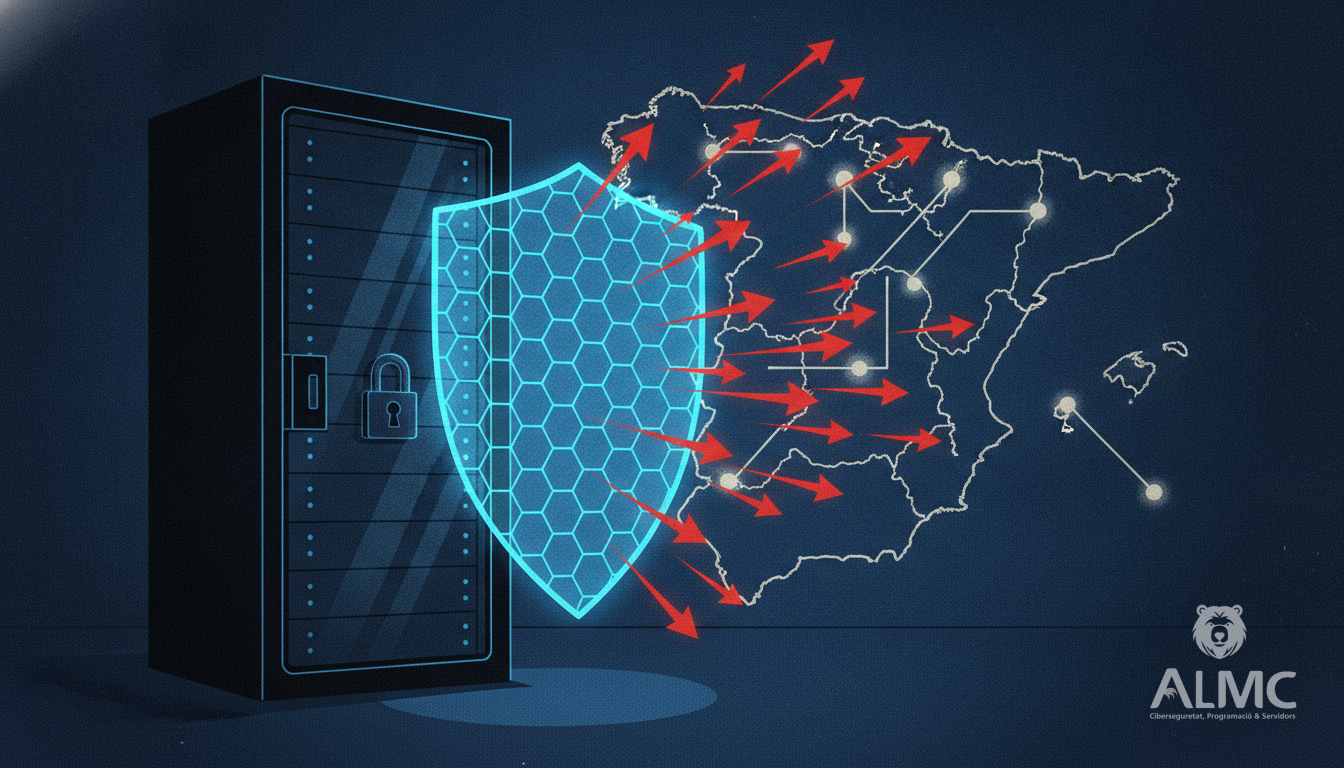
One striking trend is the persistence of exploits targeting old Microsoft Office vulnerabilities, such as CVE-2017-0199 and CVE-2017-11882. Despite being patched years ago, these flaws are still responsible for a significant share of incidents because many organisations fail to update their software. Attackers leverage malicious documents to install downloaders and backdoors, often leading to ransomware or data theft. While ransomware may represent a small percentage of overall alerts, its impact on business continuity and finances can be devastating.
Why Server-Side Protection Is Critical
While endpoint security and employee awareness are vital, servers often remain the weakest link. Web servers, particularly those running PHP applications, are frequent targets for webshells and remote access trojans (RATs). Once attackers gain a foothold, they can move laterally, exfiltrate data, or use the server for further attacks. Traditional perimeter defences like firewalls are not enough; you need active, intelligent blocking at the server level.
This is where fail2ban comes into play. Fail2ban is an open-source tool that scans log files for suspicious patterns—such as repeated failed login attempts—and automatically blocks the offending IP addresses. It is a cornerstone of server hardening, yet managing it across multiple servers can be a headache for system administrators. Each server requires its own configuration, and keeping rules consistent is challenging. Moreover, attackers often rotate IPs, so a block on one server does not protect others.
Introducing Abuse Shield: Centralised Protection for Your Servers
At ALMC, we have developed Abuse Shield, a solution that takes fail2ban to the next level. Abuse Shield centralises the protection of your servers, offering automatic blocking of malicious IPs, managed fail2ban across multiple machines, and a shared reputation feed that benefits all your servers. Instead of each server fighting threats in isolation, they form a united front.
How does it work? Abuse Shield collects data from all connected servers. When an IP is detected as malicious on one server—whether it is attempting brute-force attacks, exploiting vulnerabilities, or engaging in suspicious behaviour—that IP is immediately blocked across your entire infrastructure. This shared intelligence dramatically reduces the window of opportunity for attackers. Additionally, Abuse Shield maintains a global reputation database, so even newly deployed servers benefit from the collective knowledge of your network.
Key Benefits for System Administrators and SMEs
- Time savings: No more manually configuring fail2ban on each server. Abuse Shield handles it for you, with a central dashboard.
- Enhanced security: A shared IP reputation feed means threats are blocked everywhere, not just where they were first detected.
- Scalability: Whether you manage 5 or 500 servers, Abuse Shield scales effortlessly.
- Compliance: With GDPR requirements, demonstrating proactive security measures is essential. Abuse Shield helps you document and enforce security policies.
- Cost-effective: Avoid the expense of dedicated security hardware or complex SIEM solutions. Abuse Shield integrates with your existing infrastructure.
Real-World Applications in Spain
Consider a hosting company in Barcelona managing dozens of servers for clients across Catalonia. Without centralised protection, each server is a separate battle. With Abuse Shield, when one server detects a brute-force attack from a specific IP, all servers block it instantly. This not only protects clients but also enhances the hosting provider's reputation for reliability and security.
For an SME in Lleida running an e-commerce platform, a compromised server could mean lost sales and damaged trust. Abuse Shield provides enterprise-grade protection without the enterprise price tag. It automatically blocks malicious IPs, reducing the risk of data breaches and downtime.
Integrating Abuse Shield with Your Existing Security Stack
Abuse Shield is designed to complement your current security measures. It works alongside firewalls, intrusion detection systems, and antivirus software. By focusing on IP reputation and automated blocking, it fills a gap that many solutions overlook. It is particularly effective against distributed attacks, where multiple IPs are used to overwhelm a single server. With Abuse Shield, once an IP is flagged, it is blocked network-wide, neutralising the attack.
Moreover, Abuse Shield is easy to deploy. It supports Linux servers and can be installed on both physical and virtual machines. Configuration is straightforward, and the central dashboard provides clear visibility into blocked IPs and attack trends. Regular updates ensure that the reputation feed stays current with emerging threats.
Conclusion: Proactive Security for Peace of Mind
In an era where cyber threats are constant and evolving, relying solely on reactive measures is risky. Spanish businesses and hosting providers need proactive, centralised server protection. Abuse Shield offers a robust, affordable solution that leverages the power of fail2ban and shared intelligence. By blocking malicious IPs automatically and sharing reputation data across your servers, you can significantly reduce your attack surface and focus on what matters most: growing your business.
At ALMC, we are committed to helping organisations across Catalonia and Spain secure their digital infrastructure. Contact us today to learn how Abuse Shield can protect your servers and give you peace of mind.
Related
- How to Harden Your Servers with Fail2ban and IP Reputation Feeds
- Fail2ban: Your First Line of Defense Against Unauthorized Server Access
- Critical libssh2 flaw: urgent patch for SSH servers
- Desarrollo web
Put these ideas into practice
Talk to ALMC about a solution for your business. Explore your options or contact our team.