
Server security: why one CVE is never the whole story
Server security: why one CVE is never the whole story
One CVE, many doorsWhen a vulnerability is published, the headline label rarely captures what an attacker can actually do with it. A flaw described as...
One CVE, many doors
When a vulnerability is published, the headline label rarely captures what an attacker can actually do with it. A flaw described as a modest elevation of privilege can, once chained with other weaknesses in the same product, end up handing over full control of a critical server. This is a familiar pattern in enterprise software: a single endpoint is properly guarded, but a parallel path reaches the same code with weaker checks. For anyone running infrastructure, the lesson is not to memorise individual CVEs but to accept that attackers think in chains, not in isolated bugs.
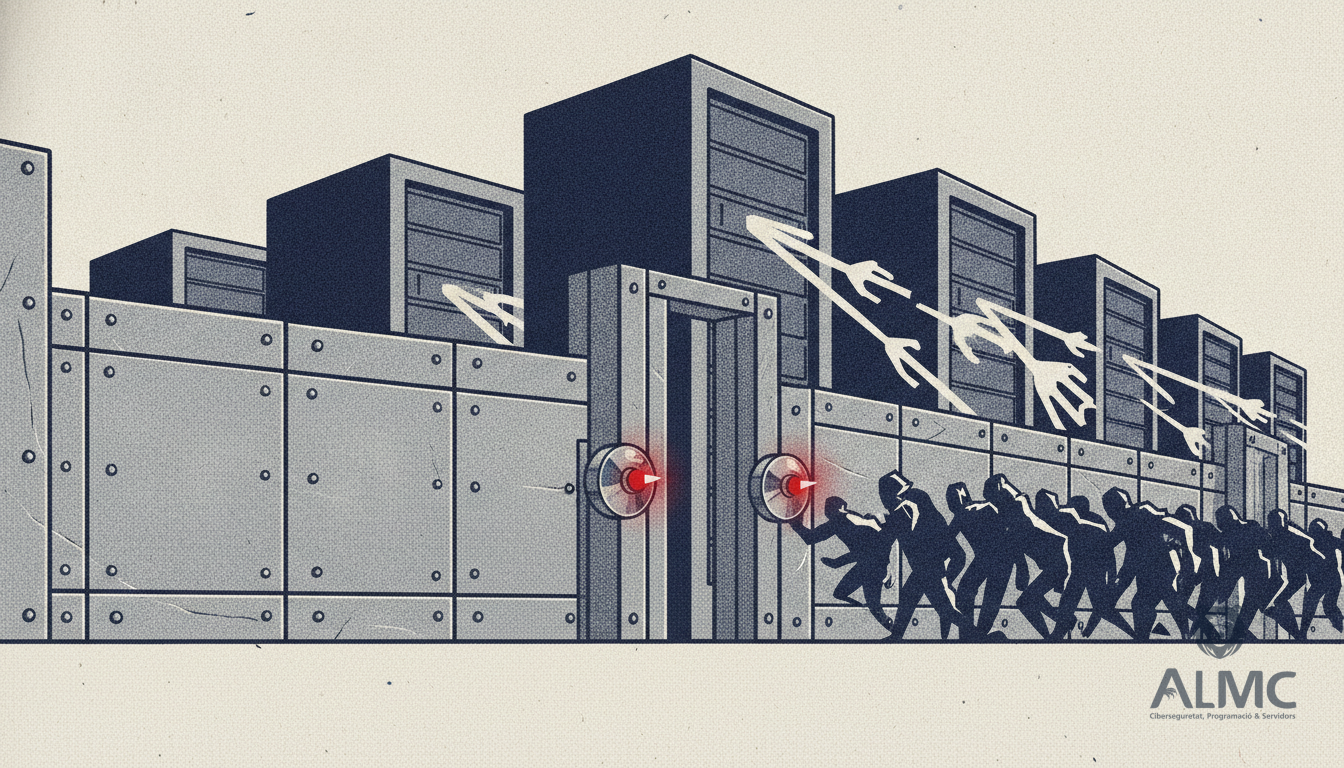
Management and configuration platforms deserve particular attention here. A system built to administer hundreds or thousands of machines holds a position of trust that is enormously valuable to an intruder. Compromising it is not the same as compromising another server: it means gaining a foothold from which managed endpoints can be influenced at scale. That is why the perimeter around such platforms needs to be treated as a first-class security concern, not an afterthought.
What the exploitation chain actually looks like
Public research on this kind of flaw tends to follow a recognisable sequence, and understanding it helps administrators spot the weak points in their own estate:
- An exposed API as the entry point. Administrative interfaces that accept file uploads are a common target, especially when two different code paths process the same content with different authorisation requirements. One route may enforce role-based access control while another reaches the same handler without it.
- Archive extraction as a write primitive. When an uploaded archive is unpacked, crafted file names or paths can escape the intended directory. A feature that looks harmless, such as uploading an extension, quietly becomes a way to place arbitrary files on disk.
- DLL hijacking to finish the job. Once files can be written to the right location, a malicious library can be planted and loaded by a legitimate process, with a proxy copy keeping the original application working so nothing looks broken.
None of these steps requires a sophisticated zero-day in isolation. Each one is a small weakness, and the danger lies in how they combine. Defensive thinking has to match that: reduce the number of small weaknesses an attacker can reach in the first place.
Why perimeter hygiene beats heroics
Most organisations cannot patch every system the moment a disclosure lands, and many cannot even inventory every exposed service reliably. What they can do is make sure that the noise reaching their servers is filtered long before it becomes interesting. The overwhelming majority of attempts against a public-facing host are automated: credential stuffing, probing of administrative endpoints, repeated authentication failures, scanning for known paths. These are not targeted attacks, but they are the raw material from which targeted attacks are built.
This is where disciplined, automated blocking pays off. Rather than relying on an administrator to notice a spike in failed logins at 3am, the server itself should recognise the pattern and act. Tools such as fail2ban remain one of the most effective and least glamorous defences available: they watch logs, detect abusive behaviour and drop the offending addresses at the firewall. The difficulty has never been the concept; it is operating it consistently across a fleet of machines, in Barcelona, Lleida, Tarragona or Girona alike, without letting rules drift out of sync.
Centralising protection with Abuse Shield
Abuse Shield is built precisely for that operational gap. Instead of configuring fail2ban separately on each host and hoping the rules stay aligned, it manages the protection centrally across multiple machines. Malicious IP addresses are blocked automatically, and a shared reputation feed means that an address caught abusing one of your servers is recognised by all of them. An attacker who burns through a login attempt on a staging box in Lleida finds the door already closed on the production cluster.
The practical benefits are straightforward:
- Consistency. Every server follows the same blocking policy, so there are no weak links hiding behind a forgotten configuration file.
- Speed. Automatic blocking removes the human delay between detection and response, which is exactly the window attackers rely on.
- Shared intelligence. Reputation built on one machine protects the whole estate, which is particularly valuable for hosting providers running many customer servers.
- Less toil. System administrators spend less time reconciling rules and more time on work that actually moves the business forward.
Building a layered posture that holds up
No single control replaces another. Patch management, least-privilege access, network segmentation and log monitoring all remain essential, and GDPR obligations around personal data mean that a breach is not only a technical incident but a legal and reputational one. Abuse Shield fits into that picture as the layer that keeps hostile traffic away from the services you have worked to harden, reducing the exposure that a chained exploit needs in order to succeed.
The realistic goal is not to be unbreachable. It is to make your infrastructure a less attractive and more expensive target than the next one, and to know that every server in your care is applying the same defensive discipline at the same moment. That is what turns a collection of individually protected machines into a coherent defensive system.
Related
- How to Harden Your Servers with Fail2ban and IP Reputation Feeds
- Fail2ban: Your First Line of Defense Against Unauthorized Server Access
- Critical libssh2 flaw: urgent patch for SSH servers
- Desarrollo web
Put these ideas into practice
Talk to ALMC about a solution for your business. Explore your options or contact our team.