
Server Security: Why Shared IP Reputation Beats Isolated Firewalls
Server Security: Why Shared IP Reputation Beats Isolated Firewalls
The gap between one protected server and a protected estateMost system administrators know the routine: an SSH brute-force attempt appears in the logs...
The gap between one protected server and a protected estate
Most system administrators know the routine: an SSH brute-force attempt appears in the logs, fail2ban bans the address after a handful of failures, and the machine carries on. Individually, that works. The problem starts when you run more than one server. An attacker who is blocked on your web node is still perfectly free to try the same credentials on your mail server, your database host or the staging box nobody remembers to patch. Each machine learns its own lessons, in isolation, and the knowledge never travels.
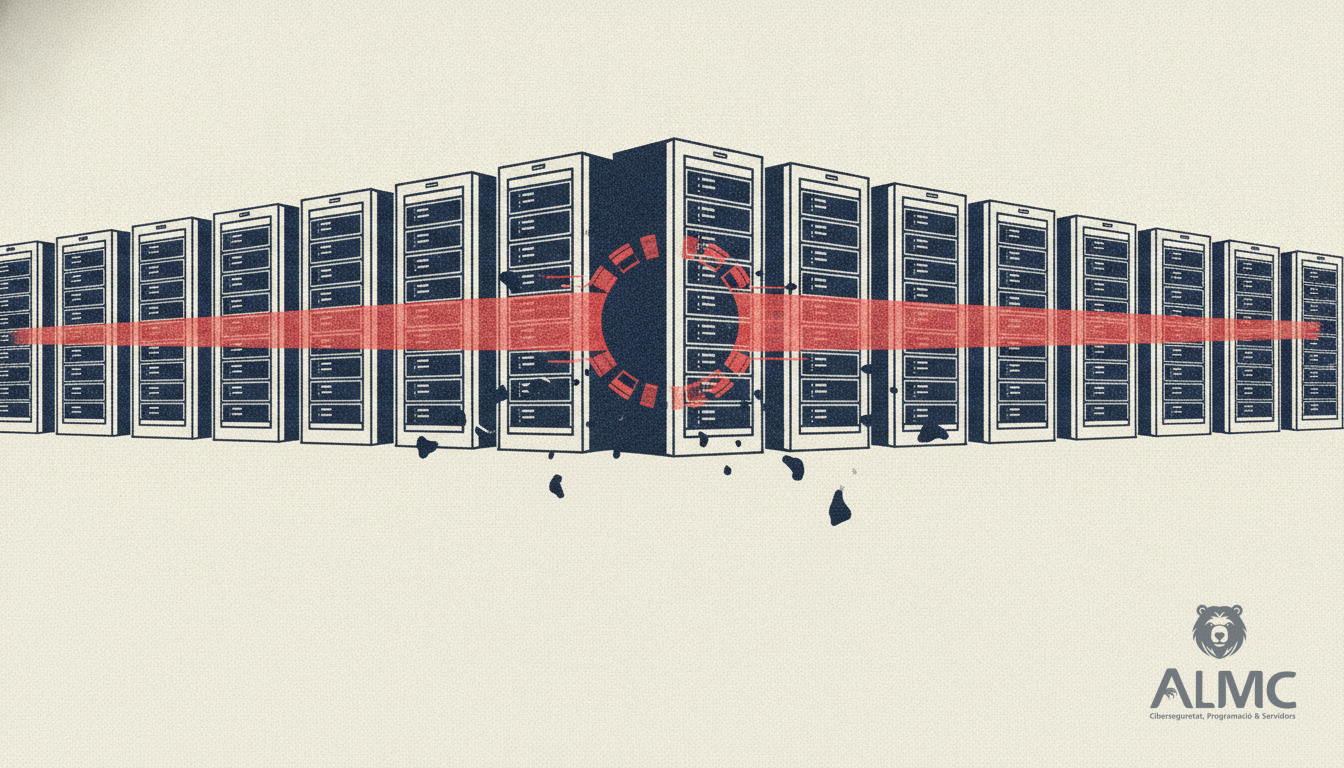
That is the structural weakness many SMEs and hosting providers in Barcelona, Lleida, Tarragona and Girona live with every day: dozens of firewalls, each one competent, none of them talking to each other. Abuse Shield was built to close exactly that gap by centralising protection rather than duplicating it.
What centralised protection actually changes
The idea is simple, but the operational difference is significant. Instead of configuring fail2ban machine by machine and hoping the rules stay consistent, Abuse Shield manages it across your whole fleet from a single point. Three capabilities matter most:
- Automatic blocking of malicious IPs. Offending addresses are detected and blocked without waiting for a human to read a log at midnight.
- Managed fail2ban across multiple machines. Policies are applied consistently, so a rule that protects one server protects all of them, and updates do not depend on someone remembering every host.
- A shared reputation feed. When one server identifies a hostile address, every other server in your estate learns about it. The first machine to be probed effectively immunises the rest.
This last point is the real shift. Traditional setups treat each server as an independent defender. A shared reputation model treats the estate as one organism, where an attack on any part hardens the whole.
Why this matters for hosting companies and SMEs
For a hosting provider, the economics are straightforward. Every minute an administrator spends copying fail2ban configuration between machines is a minute not spent on billable work, and every inconsistency between hosts is a potential incident. Centralised management turns a repetitive task into a policy, and a policy scales without adding headcount.
For an SME running its own infrastructure, the benefit is different but equally practical. Small teams rarely have someone watching logs around the clock. Automated blocking and a shared reputation feed give you a baseline of protection that keeps working during weekends, holidays and the August slowdown, when nobody is checking dashboards.
There is also a compliance angle. Under GDPR, a personal data breach can trigger notification obligations and, depending on the circumstances, exposure to administrative fines that in Spain are measured in euros and can reach significant figures. Demonstrating that you apply consistent, documented technical measures across your systems is not a guarantee against incidents, but it is a far stronger position than a patchwork of ad hoc rules.
Reputation is the part most setups miss
Consider how much effort goes into hardening a single server: SSH keys, a firewall, updated packages, perhaps an intrusion detection tool. All of it is worthwhile, and none of it answers the question of what your other servers already know. An address that has been hammering your web front end for a week is, by any reasonable definition, a known bad actor. Yet without a shared feed, your database server will happily accept its first connection attempt as if nothing had happened.
Sharing reputation between machines compresses the time between detection and protection from days to seconds. It also reduces noise: once an address is flagged, every node can drop it early, which means fewer wasted resources and cleaner logs for the people who actually have to read them.
Getting started without disrupting operations
Rolling this out does not require rebuilding your infrastructure. A sensible sequence looks like this:
- Inventory your servers and identify which ones are internet-facing and which hold sensitive data.
- Standardise your fail2ban thresholds and ban durations before centralising, so the policy reflects your actual risk appetite.
- Connect the machines to the shared reputation feed and monitor the first weeks closely to catch false positives.
- Review blocked addresses periodically and tune the rules, because a protection layer nobody audits slowly drifts out of alignment with reality.
Security is rarely about a single dramatic tool. It is about removing the small gaps that attackers rely on, and the gap between isolated servers is one of the most common and least discussed. Closing it is a modest change in architecture with a disproportionate effect on your exposure.
Related
- How to Harden Your Servers with Fail2ban and IP Reputation Feeds
- Fail2ban: Your First Line of Defense Against Unauthorized Server Access
- Critical libssh2 flaw: urgent patch for SSH servers
- Desarrollo web
Put these ideas into practice
Talk to ALMC about a solution for your business. Explore your options or contact our team.