
Abuse Shield: Centralised Server Protection for SMEs
Abuse Shield: Centralised Server Protection for SMEs
Why server security is no longer a one-person jobSmall and medium-sized businesses in Catalonia and across Spain are running more internet-facing infr...
Why server security is no longer a one-person job
Small and medium-sized businesses in Catalonia and across Spain are running more internet-facing infrastructure than ever. Whether you manage a handful of VPS instances for a hosting business in Barcelona or maintain the internal servers of a family-run company in Lleida, the pressure to keep them secure has grown faster than most teams can hire for it. Cybersecurity is often just one item on a long to-do list for a single administrator who also handles accounts, backups and day-to-day support.
At the same time, the threat landscape has become noisier. Automated scanners, credential-stuffing bots and opportunistic brute-force attempts are constant background noise. Artificial intelligence has accelerated this: attackers can generate more convincing phishing lures, probe for weaknesses faster and scale their campaigns with less effort. For a small team, the result is a widening gap between what should be monitored and what actually is.
The hidden cost of managing fail2ban server by server
Many administrators already rely on fail2ban to block malicious IP addresses. It is a proven, open-source tool, and it works well on a single machine. The problem appears when you operate several servers. Each instance has its own configuration, its own log files and its own list of banned addresses. An attacker who is blocked on one server can simply try the same credentials on another. Keeping rules consistent across ten machines becomes a manual, error-prone routine that few teams have time for.
There is also the question of visibility. When an incident occurs, piecing together what happened across multiple servers means jumping between dashboards, comparing timestamps and hoping the logs have not rotated away. This fragmentation is exactly where small teams lose time and where attackers find gaps.
What Abuse Shield changes
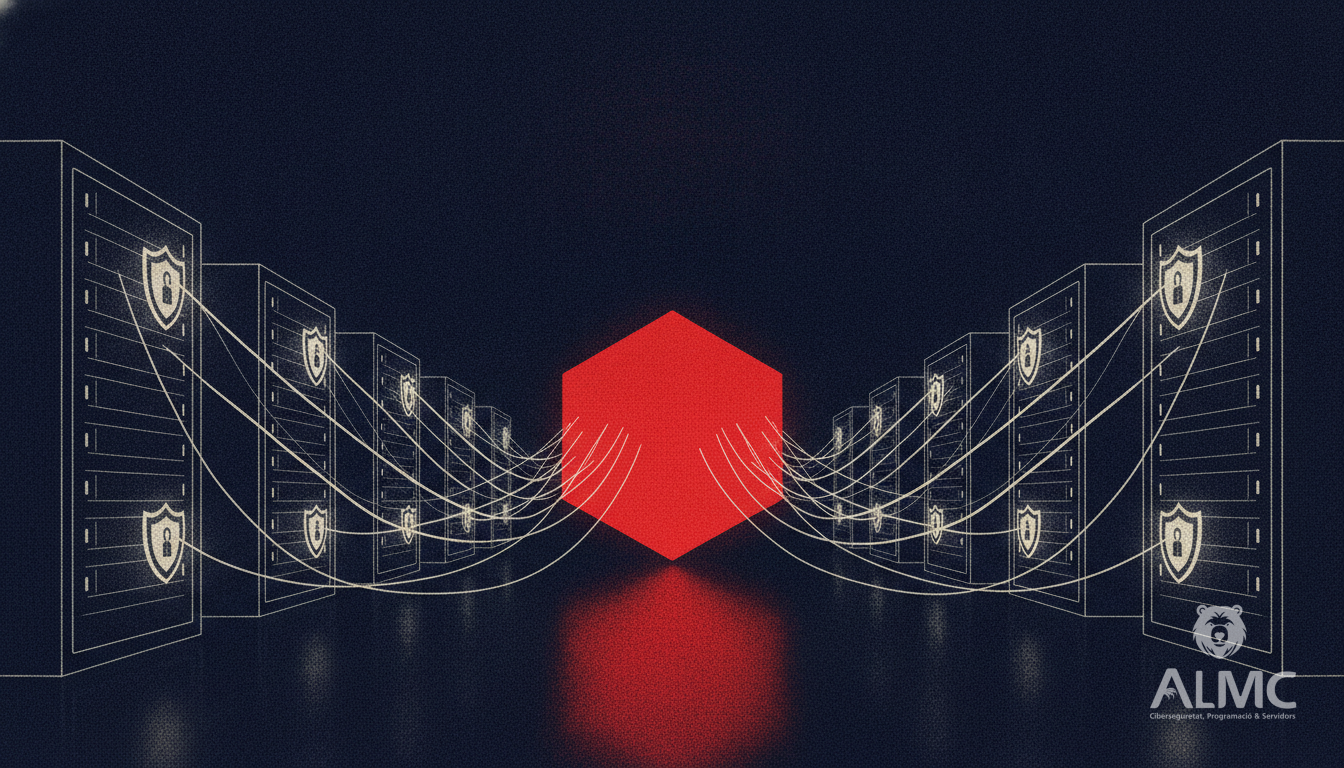
Abuse Shield is designed to close that gap by centralising protection across all your servers. Instead of treating each machine as an isolated island, it coordinates blocking decisions and shares intelligence between them. The core idea is simple: if an IP address has been caught behaving maliciously on one server, the rest of your fleet should know about it immediately.
- Automatic malicious IP blocking: suspicious addresses are blocked without waiting for manual intervention, reducing the window of exposure.
- Managed fail2ban across multiple machines: configuration and rule enforcement are handled centrally, so every server applies the same policy.
- Shared IP reputation feed: threat intelligence gathered on one machine is distributed to all the others, making your whole infrastructure harder to probe.
For hosting companies, this shared reputation model is particularly valuable. A client's server that comes under attack effectively strengthens the protection of every other server in the same account or fleet. For an SME with two or three servers, it means the security posture of the weakest machine no longer defines the risk of the whole estate.
Built for teams without a dedicated security department
Abuse Shield is aimed at system administrators, hosting providers and small businesses that run their own servers but cannot afford a full security operations centre. It does not require you to become a fail2ban expert or to build your own threat intelligence pipeline. The service handles the operational burden while keeping you in control of the rules that matter to your business.
This matters in the Spanish context, where GDPR and the national data protection framework place clear obligations on companies that process personal data. A compromised server can lead to a reportable breach, reputational damage and fines that are disproportionate for a small company. Centralised blocking and a shared reputation feed are practical measures that support your security obligations without demanding a large budget.
Practical steps to get more from your server protection
Whichever tools you use, a few habits make a measurable difference. Start by inventorying every server that accepts connections from the internet, including staging and backup machines that are often forgotten. Review your fail2ban rules so that they reflect your actual services rather than default templates. Then decide how quickly you need to propagate a ban across your fleet: the shorter the delay, the less time an attacker has to pivot.
It also helps to treat security as a shared service rather than a per-machine chore. When one administrator discovers a new attack pattern, the whole team should benefit from it. Abuse Shield is built around that principle, turning isolated defences into a coordinated shield that grows stronger as you add more servers.
If you are managing servers in Barcelona, Tarragona, Girona or Lleida and feel that security is consuming time you do not have, centralising the basics is a sensible first move. Protecting your infrastructure does not have to mean adding complexity; it can mean removing the repetitive work that keeps you from focusing on your business.
Related
- How to Harden Your Servers with Fail2ban and IP Reputation Feeds
- Fail2ban: Your First Line of Defense Against Unauthorized Server Access
- Critical libssh2 flaw: urgent patch for SSH servers
- Desarrollo web
Put these ideas into practice
Talk to ALMC about a solution for your business. Explore your options or contact our team.